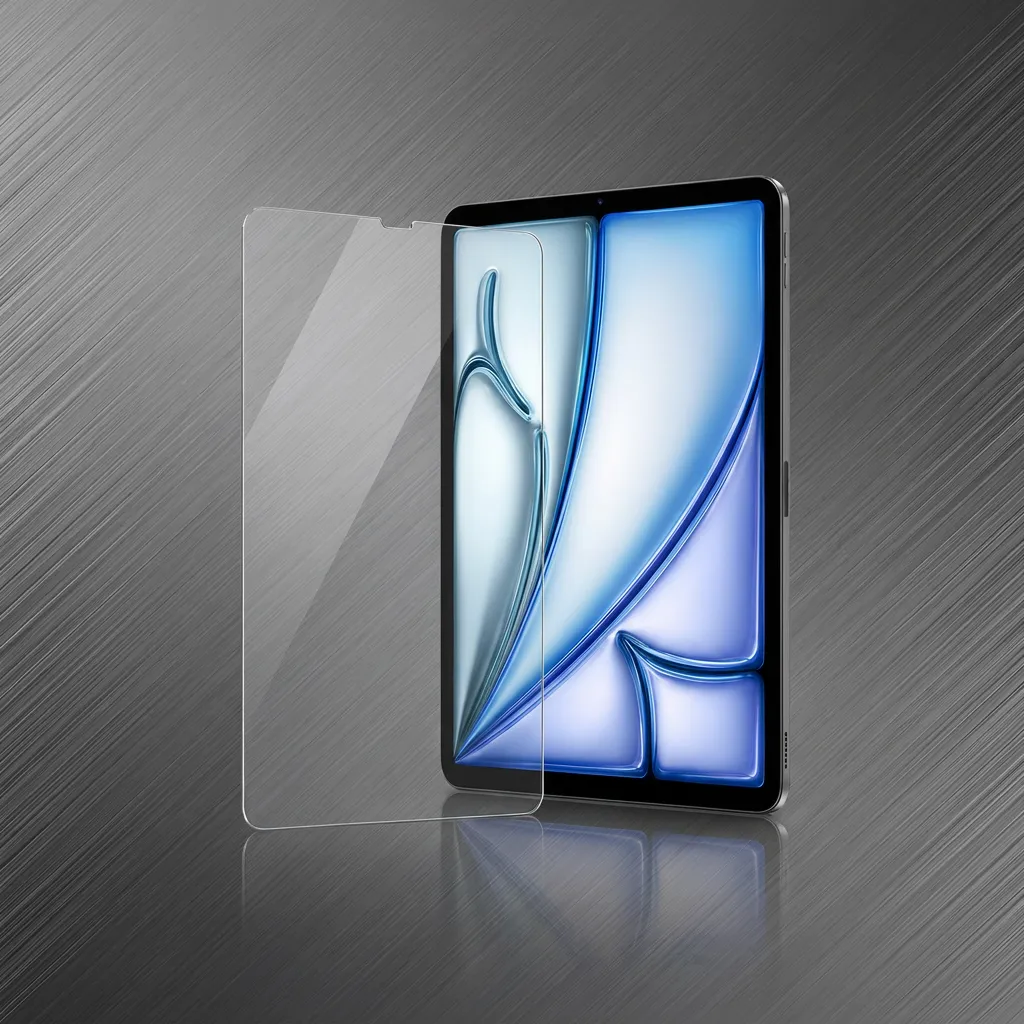
Try writing on a bare iPad screen with an Apple Pencil. The plastic tip slides across the glass like ice on a frozen lake. Your handwriting looks different — worse — than on paper. Lines wobble, letters connect oddly, and your hand cramps from pressing too hard to get traction.
This is the problem that paper-like screen protectors solve.
Paper-like protectors have a micro-etched surface texture — thousands of tiny peaks and valleys that create controlled friction against a stylus tip. When the Pencil drags across this texture, it encounters physical resistance similar to a ballpoint pen on notebook paper.
The effect is immediate and transformative:
Cheap paper-like films often go too far with the texture. They feel like 80-grit sandpaper under your finger, make the screen look grainy, and reduce sharpness noticeably. A good paper-like film balances three competing goals:
LUSA DESIGN spent two years developing our proprietary etching pattern that hits all three targets. We call it PaperTouch Matrix — a variable-pitch texture that is finer in the center (where you read) and slightly more textured toward the edges (where you rest your palm).
If you use Procreate, Clip Studio Paint, or Affinity Designer, paper-like film is game-changing. Sketching, inking, and coloring all feel more connected. Many professional illustrators refuse to work on a bare iPad screen.
Apps like GoodNotes, Notability, and Nebo become genuine notebook replacements when the writing surface has proper friction. Your handwritten notes look like they were written on paper — because the tactile feedback guides your hand the same way.
Marking up contracts, grading papers, or editing manuscripts requires precise pen control. Paper-like film gives you that control without the smudge risk of real ink.
For most creators, these trade-offs are absolutely worth it.
Transform your iPad into the ultimate creative tool with a LUSA DESIGN paper-like screen protector. Available for iPad Pro 11", iPad Pro 13", iPad Air, and standard iPad models. Shop at lusafilm.com.