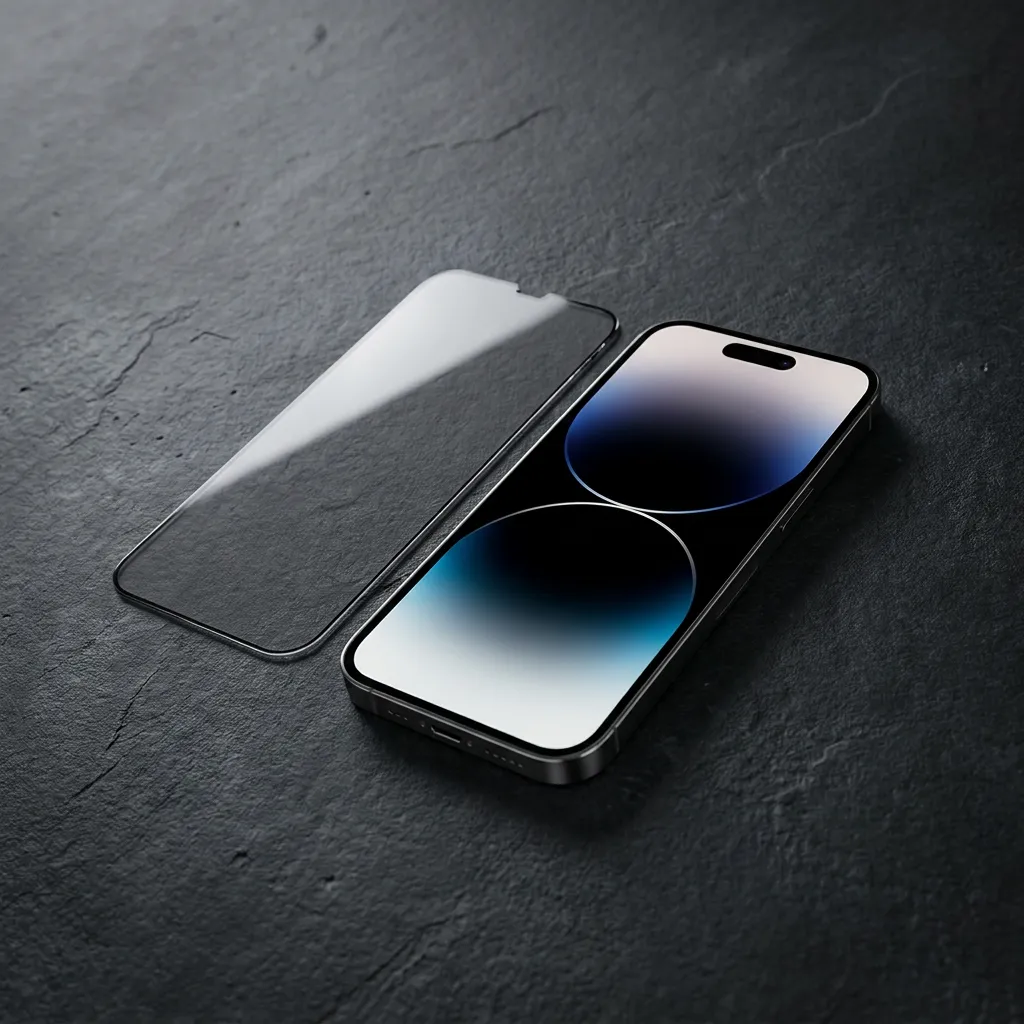
Face ID problems after installing a screen protector are usually caused by fit or installation, not by the simple fact that glass is on the display. A protector made for the exact iPhone model and placed correctly should leave the front camera and sensor system working normally. Trouble is more likely when the wrong size is used, the top edge is misaligned, or dust and bubbles collect around the notch or Dynamic Island area.
This guide explains what to check before buying, what to test after installation, and how two LUSA DESIGN iPhone protectors approach fit, clarity, privacy, and dust control.
The front camera and Face ID hardware sit around the notch or Dynamic Island, depending on the iPhone model. The exact position and surrounding screen dimensions change across generations. Even models that look similar can have different display sizes, corner shapes, borders, and sensor layouts.
That is why “close enough” is not a reliable way to choose a screen protector. A protector for another iPhone model may cover the wrong area, leave an uneven gap, or sit too close to the case. For the best result, match the model name on the phone with the compatibility option on the product page.
The LUSA DESIGN HD Anti-Reflective Screen Protector is a tempered-glass option for multiple iPhone generations. The current listing includes model choices across the iPhone 12, 13, 14, 15, 16, and 17 families. Its product description highlights a 1:1 precision mold, high touch sensitivity, anti-reflective coating, and a dust-free installation tray.

For people who use maps outdoors, work near windows, or spend time under bright office lights, the AR coating is designed to reduce distracting reflections while preserving a normal viewing angle. The model-specific design and guided tray also make this product relevant to the Face ID question: accurate fit and controlled placement help keep the top of the display aligned as intended.
The LUSA DESIGN 180° 2.5D AR Privacy Screen Protector is designed for shared spaces such as public transport, cafés, airports, and open offices. The current product page lists versions for selected iPhone 15, 16, and 17 models. Its privacy layer makes the display harder to read from the left and right while keeping the front view clear.

A privacy filter changes side-angle visibility; it should not be treated as a cover for someone looking directly at the screen. The privacy effect is also separate from Face ID operation. Correct model selection and accurate alignment remain the key checks around the front sensor area.
| Daily need | HD Anti-Reflective Glass | 180° AR Privacy Glass |
|---|---|---|
| Reduce reflections in bright places | Primary purpose | Includes AR functionality |
| Limit left-and-right viewing | No privacy filter | Primary purpose |
| Guided dust-free installation | Included in the listing | Included in the listing |
| Best first check | Confirm the exact iPhone model | Confirm the exact iPhone model |
Before leaving the installation area, run this five-minute check:
If Face ID worked before installation but does not work afterward, clean the outer surface first. Then confirm the model and alignment. If the problem remains, remove the case and test again. A lifted edge or pressure from the case may be the real cause. If needed, remove the protector and test the bare phone to separate an installation issue from a device setting or hardware issue.
A screen protector should protect the display without turning Face ID, the front camera, or touch response into a daily problem. The safest approach is simple: choose the exact iPhone model, install the glass squarely, keep the sensor area clean, and make sure the case does not lift the edges.
For clear viewing in bright environments, explore the LUSA DESIGN HD Anti-Reflective Glass. For left-and-right privacy in shared spaces, compare the LUSA DESIGN 180° AR Privacy Glass. Always confirm the exact model on the product page before choosing.