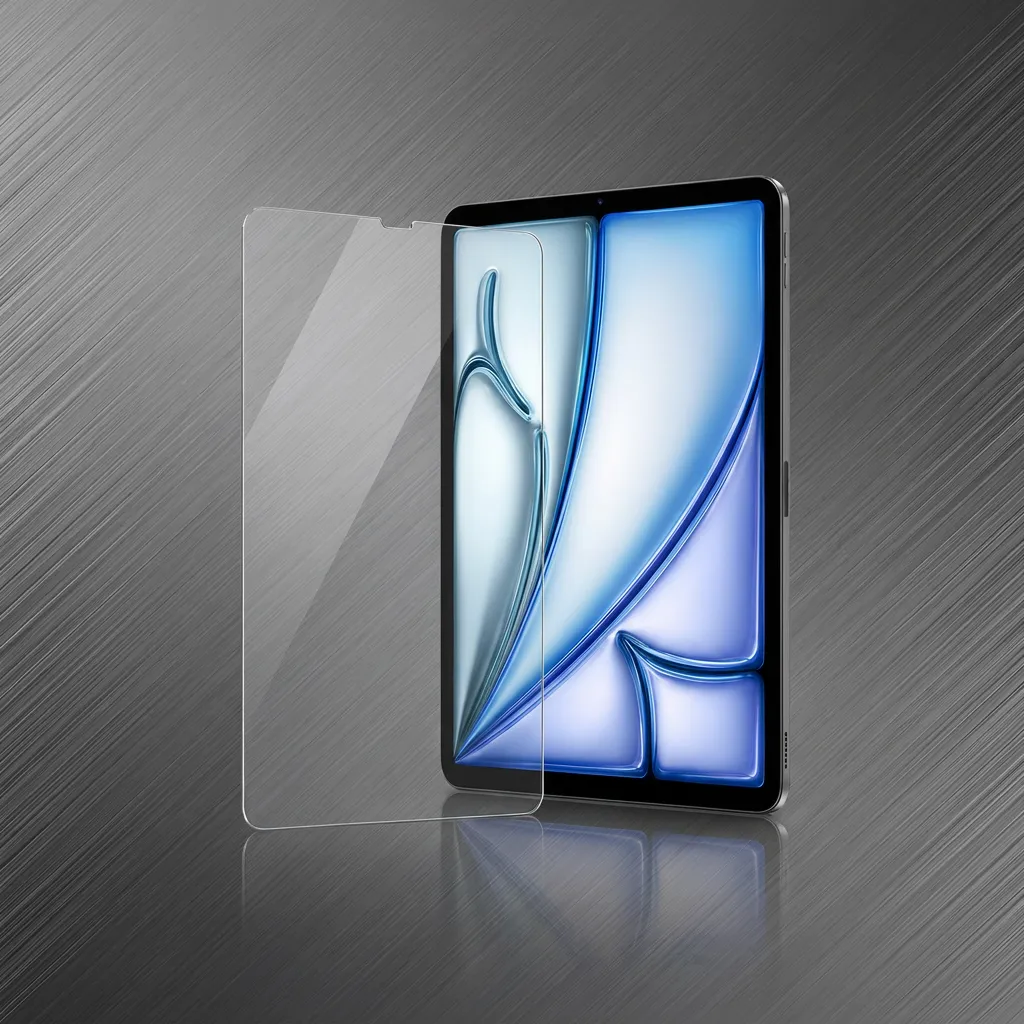
Bright rooms can make an iPad harder to read even when the display itself is bright, sharp, and working normally. The problem is often not only screen brightness; it is the way window light, ceiling lamps, white desks, and glossy surfaces bounce back toward the viewer. For readers, students, office users, and anyone spending long sessions on an iPad, understanding this difference matters. A matte screen protector can reduce distracting reflections, but it should be understood as one part of screen comfort, alongside lighting, viewing distance, breaks, and brightness settings.
A bright room creates several viewing problems at the same time. First, ambient light competes with the light coming from the screen, so the display may feel less readable even when the iPad is set to a high brightness level. Second, strong light sources can reflect from the screen surface at specific angles, creating glare spots that interrupt text, diagrams, or interface details. Third, the longer a person reads, annotates, or browses, the more those small interruptions become tiring. The American Optometric Association discusses computer vision syndrome as a group of screen-related symptoms influenced by screen use, viewing conditions, and visual demands, which is why glare should be seen as part of the environment rather than a single accessory problem.
A matte surface works by changing the viewing experience of reflected light. Instead of allowing a sharp mirror-like reflection from a window, lamp, or ceiling panel, a matte anti-glare surface tends to diffuse that reflection so it becomes softer and less visually dominant. This can make reading feel calmer in an office, classroom, living room, or library with overhead lighting. However, diffusion is not the same as complete removal. A very bright window behind the user, a lamp pointed toward the screen, or direct sunlight can still reduce visibility. That is why an anti-glare screen protector should be understood as reflection management, not a guarantee that every light source disappears.
Long reading sessions add a time factor that no screen film can solve alone. Mayo Clinic notes that eyestrain can be associated with extended screen use, glare, poor lighting, and focusing for long periods without enough breaks. In practical iPad use, this means a matte screen protector may reduce one source of distraction, while the user still needs sensible viewing habits. Adjusting brightness to match the room, placing the iPad away from strong reflections, increasing text size when needed, and taking periodic breaks all matter. A screen accessory can improve the surface experience, but it should not be treated as a medical device or a complete answer to discomfort.
The terms matte screen protector and anti-glare screen protector often appear together because they describe related ideas from different angles. “Matte” describes the surface feel and visual finish; “anti-glare” describes the intended viewing benefit. For an iPad screen protector, that usually means a surface designed to reduce harsh reflected highlights and make bright-room use less distracting. The boundary is important: matte does not automatically mean perfect clarity, and anti-glare does not mean the display will look identical to a bare glossy iPad screen. A matte finish can slightly change the way black text, white backgrounds, color edges, and small interface details appear because light is being scattered rather than reflected sharply. This is where display tradeoffs become visible. Some users prefer a matte surface for reading PDFs, writing with Apple Pencil, or working under office lighting because the screen feels less mirror-like and sometimes more paper-like. Other users may notice that a matte surface can make the display feel less glossy or slightly softer, especially when viewing high-resolution images, small type, or rich color content. LUSA DESIGN uses terms such as matte side, anti-glare, matte surface, AR Ultra HD light transmission, ultra-thin, touch sensitivity, and Apple Pencil Compatible in the product setting for its iPad privacy screen protector. These are useful experience signals, but they should be read carefully: AR Ultra HD light transmission is a display-experience claim in the product wording, not an independent public test result or a promise that every user will perceive brightness and clarity the same way. The privacy screen protector layer adds another reason to keep expectations realistic. An iPad privacy screen protector is not only a clear protective sheet; it may also include viewing-angle control features, which can influence perceived brightness or shared viewing compared with a clear film. When anti-glare, matte finish, privacy filtering, and touch use all appear in one product, the experience is best judged as a balance. The reader should ask what problem matters most in daily use: reducing reflections during reading, lowering side-view visibility in public spaces, preserving display clarity for visual work, or keeping Apple Pencil and touch interaction comfortable. No single phrase on its own explains the whole material experience.
Screen comfort is more dependable when anti-glare is treated as one tool within a wider viewing setup. The Canadian Centre for Occupational Health and Safety discusses office eye discomfort in relation to lighting, glare, screen placement, and work habits, which fits everyday iPad use in bright rooms. If the iPad faces a window, the user may still fight reflections even with a matte screen protector. If the screen is too dim for the room, text may feel low contrast. If the user reads continuously for a long session without looking away, discomfort may still build. The accessory can reduce surface-level reflection distraction, but the surrounding conditions still shape the result. A practical way to understand the boundary is to separate “less glare” from “no eye strain.” Less glare means reflected light may become less sharp, less mirror-like, and less likely to pull attention away from the content. No eye strain would be a much stronger health claim, and it is not something a consumer screen protector should promise. Eye comfort depends on the person’s vision, the task, font size, ambient light, posture, blink rate, screen distance, and duration of use. Readers who already experience persistent pain, blurred vision, headaches, or unusual symptoms should treat those as reasons to seek professional advice rather than as problems to solve only through an anti-glare screen protector. For LUSA DESIGN, the most useful way to read the matte side and anti-glare wording is as a viewing-environment cue. It suggests that the product is intended to help with glare and distracting reflections during everyday iPad use, including bright rooms and longer reading sessions. It does not prove a specific medical benefit, a measured glare-reduction percentage, or identical performance in direct sunlight, office lighting, and home lighting. Readers comparing an iPad screen protector for comfort should keep the product wording tied to ordinary visual experience: reflection reduction, display feel, writing feel, and privacy filtering, while still managing the room, screen angle, brightness, and rest habits.
A matte anti-glare iPad screen protector is most useful when the main problem is reflected light from windows, lamps, or bright indoor surfaces. It can make reading and work feel less visually interrupted, especially when paired with better screen angle, sensible brightness, and breaks during long sessions. For LUSA DESIGN, terms such as matte side and AR Ultra HD light transmission can help readers understand the intended display experience, but they should not be stretched into medical eye-care claims or guaranteed performance in every lighting condition. The strongest judgment is simple: use anti-glare for reflection management, and use healthy screen habits for long-session comfort.
Q:Does a matte iPad screen protector reduce glare in bright rooms?
A:Yes, a matte iPad screen protector can help reduce glare by diffusing sharp reflections from windows, lamps, and overhead lighting. It will not remove every light source or make direct sunlight irrelevant, but it can make bright-room reading less distracting when the iPad angle and room lighting are also managed well.
Q:Can an anti-glare screen protector prevent eye strain during long reading sessions?
A:An anti-glare screen protector may reduce reflection-related discomfort, but it should not be described as preventing eye strain by itself. Long reading comfort also depends on breaks, screen distance, brightness, text size, room lighting, blink habits, and personal vision needs. Persistent symptoms should be handled with professional eye-care advice.
Q:How should LUSA DESIGN matte side and AR Ultra HD light transmission claims be understood?
A:They should be understood as product experience claims about surface finish and display viewing goals. The matte side wording points to glare and reflection reduction, while AR Ultra HD light transmission suggests an intended clarity or brightness-preservation experience. These claims should not be expanded into verified medical effects, certified optical test results, or guaranteed performance in every lighting environment.
Computer vision syndrome | AOA
Eyestrain - Symptoms and causes - Mayo Clinic
CCOHS: Office Ergonomics - Eye Discomfort in the Office
LUSA DESIGN Upgrade 360° Privacy Screen Protector for Apple iPad Pro 13 inch