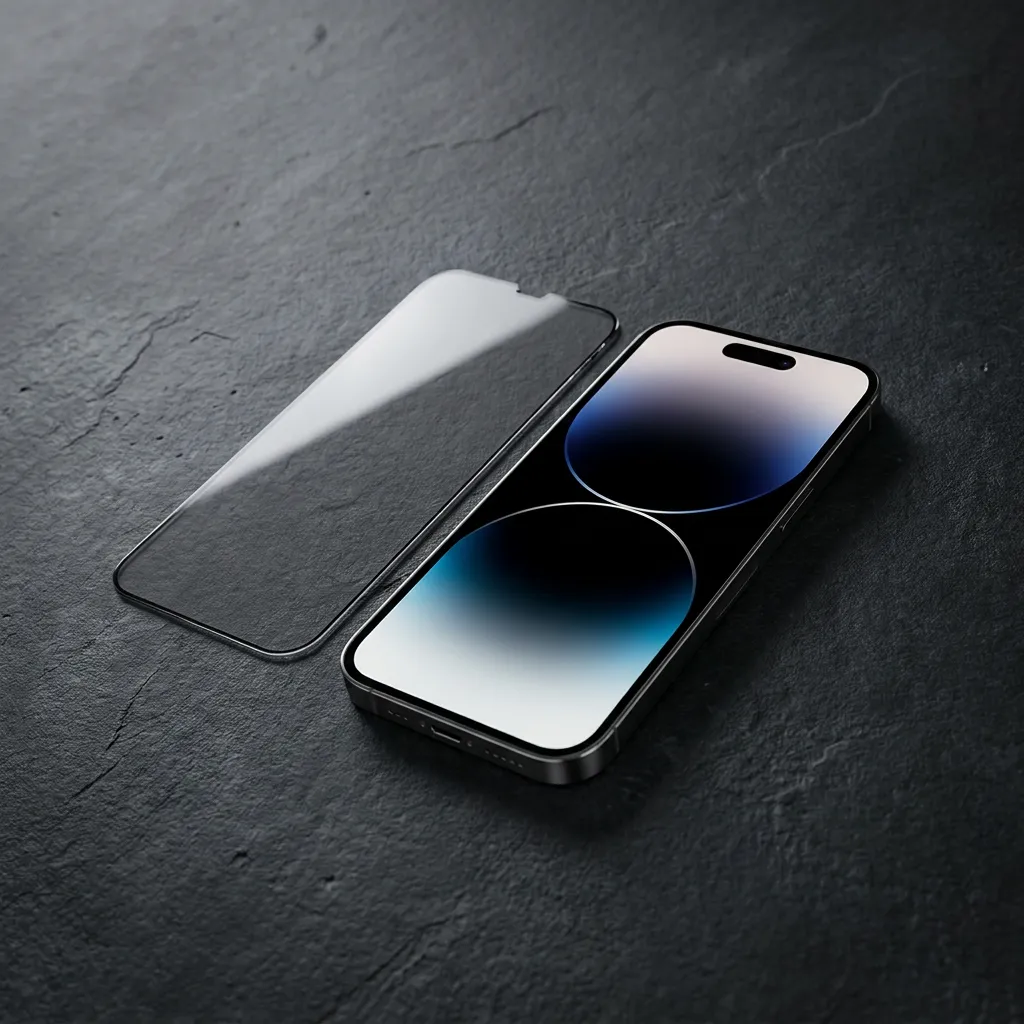
Flexible PET privacy film does not always look or behave exactly like tempered glass during installation. The material is thinner and more flexible, and the first inspection should focus on alignment, adhesive contact, touch response, and whether small installation marks are changing over time.
The first 24 hours are a monitoring period, not an invitation to keep lifting the film. Repeated handling can introduce dust or stretch an edge that was settling normally.
The LUSA DESIGN PET Full-Glue Privacy Screen Protector is listed as an ultra-thin, full-glue flexible privacy film for selected iPhone 15, 16, and 17 models. Its product page describes high touch sensitivity, an oleophobic surface, and small bubbles or minor marks that may disappear within 24 hours.

That statement is specific to the product listing and should not be treated as a promise that every trapped particle will vanish. A hard speck of dust, a hair, or serious misalignment is different from a small air mark in a flexible installation.
Look at the top, bottom, and both side gaps. Confirm that the film is centered around the notch or Dynamic Island and does not hang over an edge. Test Face ID, the front camera, typing, swipes, and touch near the corners. Alignment problems are easier to identify before a case applies pressure.
If the product instructions say small bubbles may settle, give them time. Do not stab a bubble with a pin, flood the edge with liquid, or peel the film back repeatedly. Keep the phone at a normal indoor temperature on a clean surface. Avoid a tight pocket that presses unevenly against the new film.
Install the case gently and watch whether one corner begins to lift. A case lip that touches the film can push it inward or upward. If contact appears, remove the case and confirm both the case design and the selected protector model. A case problem will not improve simply because more time passes.
Take a photo immediately after installation and another later under the same light. Comparing images makes it easier to see whether a small air mark is shrinking. Also check whether new dust has entered an edge or whether the film has shifted. Keep the screen clean with a dry microfiber cloth so surface oil is not mistaken for haze below the film.
Use a soft microfiber cloth and light pressure. Avoid sharp scraping tools and abrasive powders. The listing describes an oleophobic surface intended to make fingerprints and oil easier to manage, but any coating lasts longer when cleaning remains gentle.
Look at the display from the normal front position, then from the left and right. Check maps, text, photos, and the lock screen. A privacy layer is meant to change side views; it does not hide the screen from someone directly in front. Adjust expectations and brightness based on the actual way you hold the phone.
The most useful first-day approach is patient and specific: verify fit immediately, protect the new edges, monitor small marks, and intervene only when the evidence points to debris, pressure, or incorrect alignment.