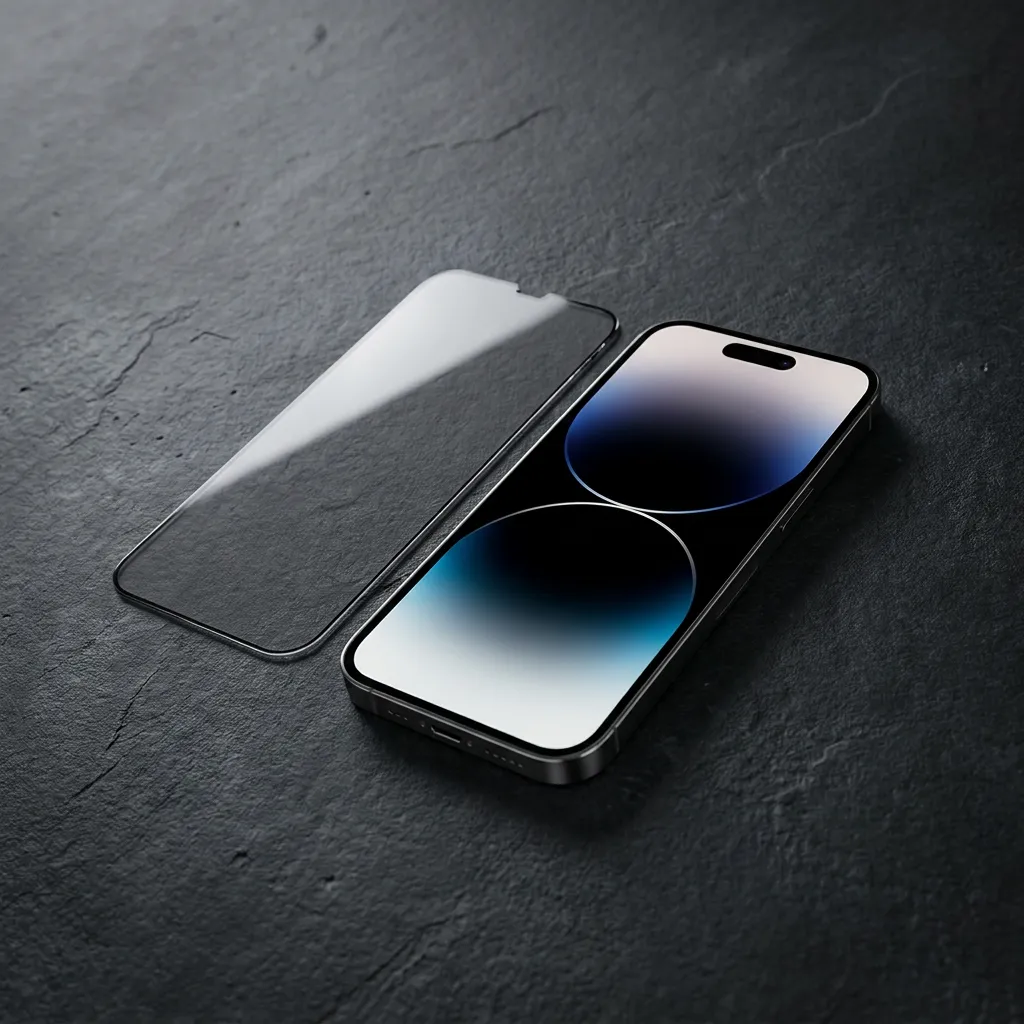
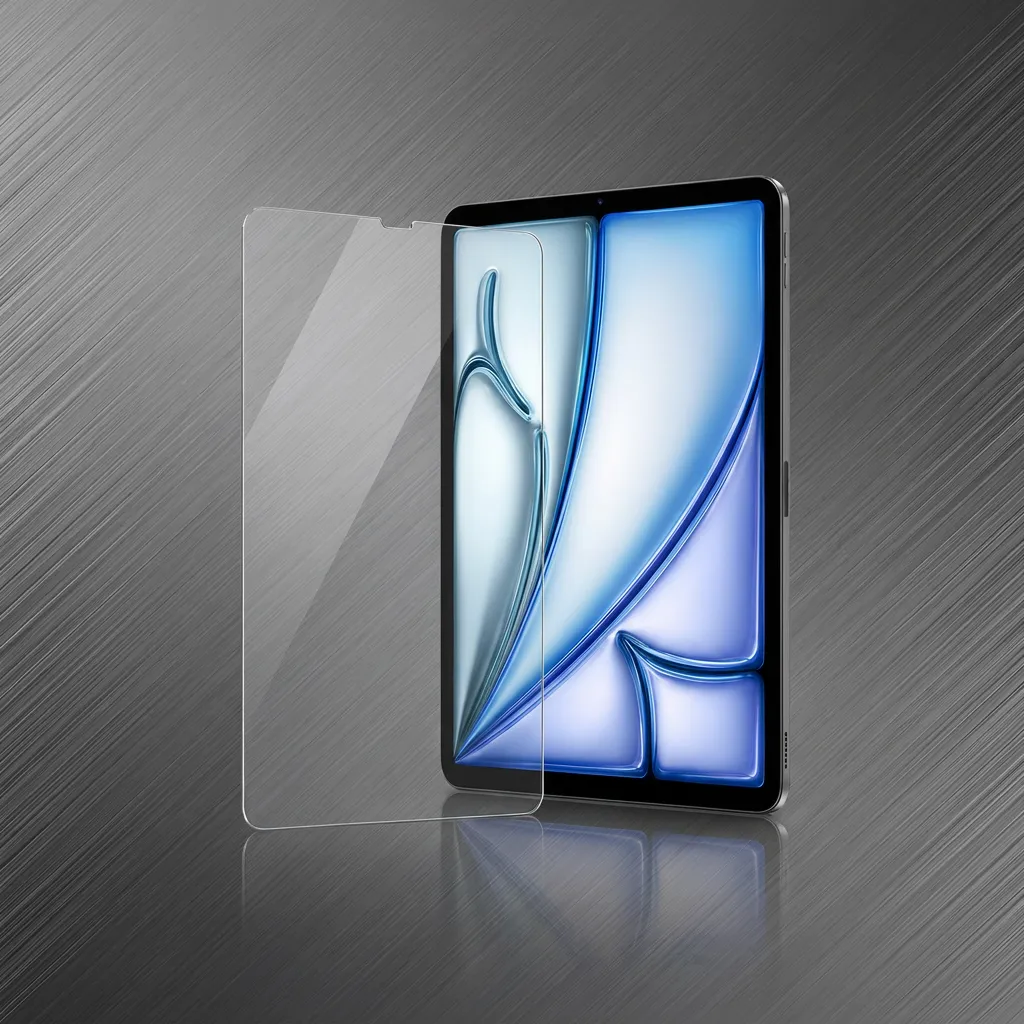
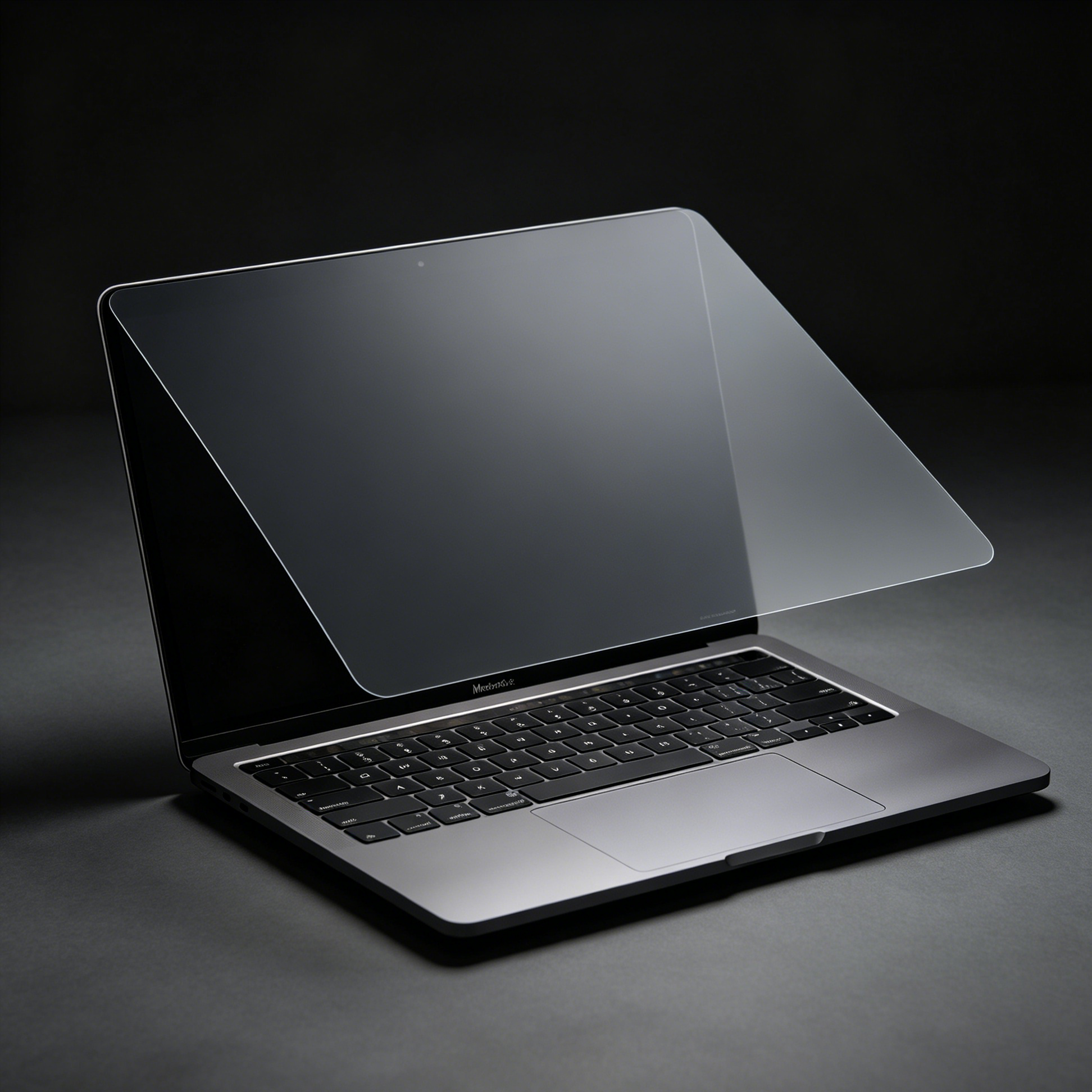
AR stands for Anti-Reflective — a thin optical coating applied to tempered glass or PET film that cuts down the light bouncing off your screen. Unlike old-school matte protectors that simply scatter light (and blur everything), modern AR film uses nanoscale layers to cancel reflections through destructive interference. The result? Your display stays sharp, colors stay vivid, and glare drops dramatically.
The science is elegant. When ambient light hits a bare glass surface, about 4–8% bounces back as a distracting reflection. AR coating adds one or more transparent layers with a specific refractive index. Incoming light hits these layers at slightly different angles; the reflected waves fall out of phase and cancel each other. Think of it as noise-canceling headphones — but for light.
LUSA DESIGN engineers this effect into every AR screen protector using multi-layer vacuum deposition. That is why our films achieve <1% reflectance while keeping over 99% light transmission.
Matte protectors have been popular for years because they kill glare cheaply. But they do it by adding a rough texture that diffuses light in all directions. Side effects:
AR film avoids all of that. It keeps the surface smooth so pixels render exactly as the display intended. You get glare reduction plus crystal-clear text and accurate color reproduction.
Not all AR coatings are created equal. Cheap alternatives use a single spray-on layer that wears off in weeks. LUSA DESIGN uses:
If you spend more than two hours a day looking at your phone screen, an AR screen protector is one of the best investments you can make. It protects your display from scratches, reduces eye strain from glare, and keeps your content looking exactly as the designer intended. LUSA DESIGN AR film delivers professional-grade optical performance at a consumer-friendly price.
Ready to see the difference? Browse our full range of AR screen protectors at lusafilm.com.