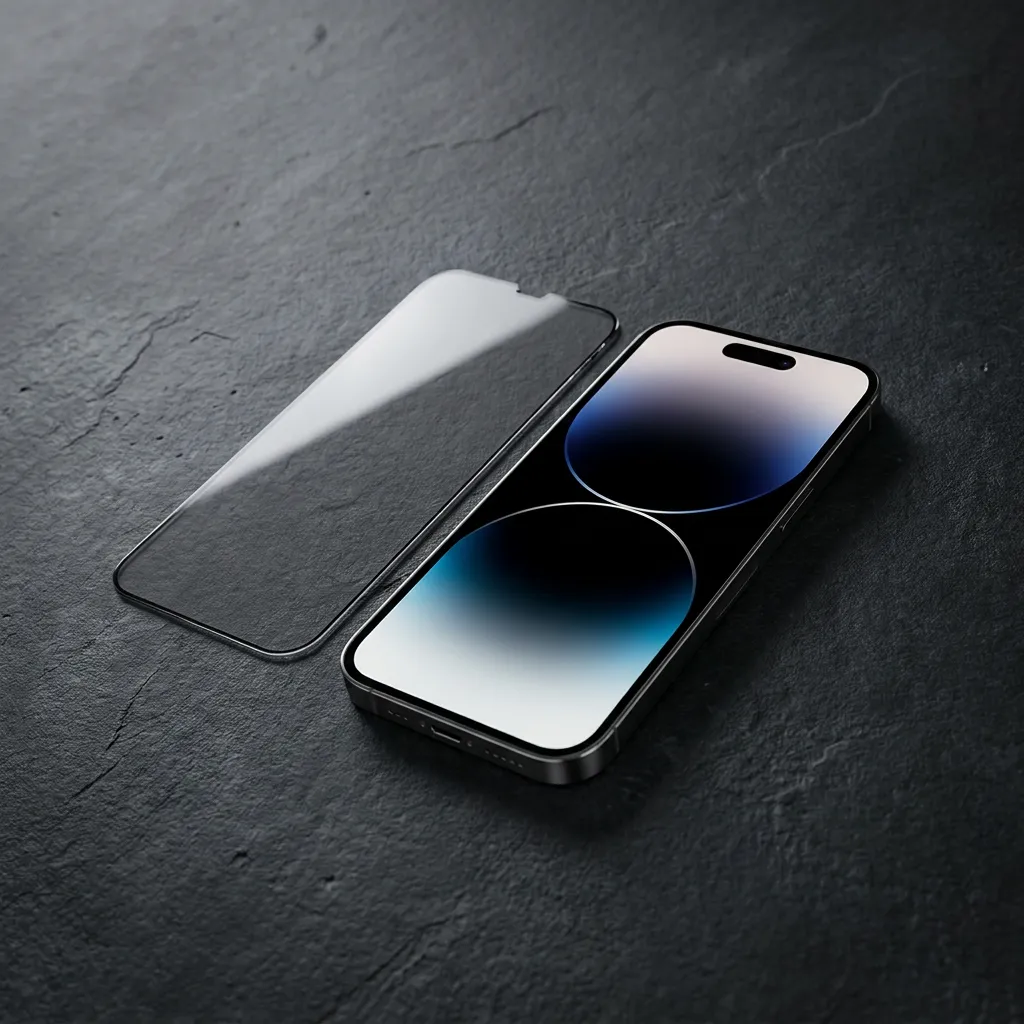
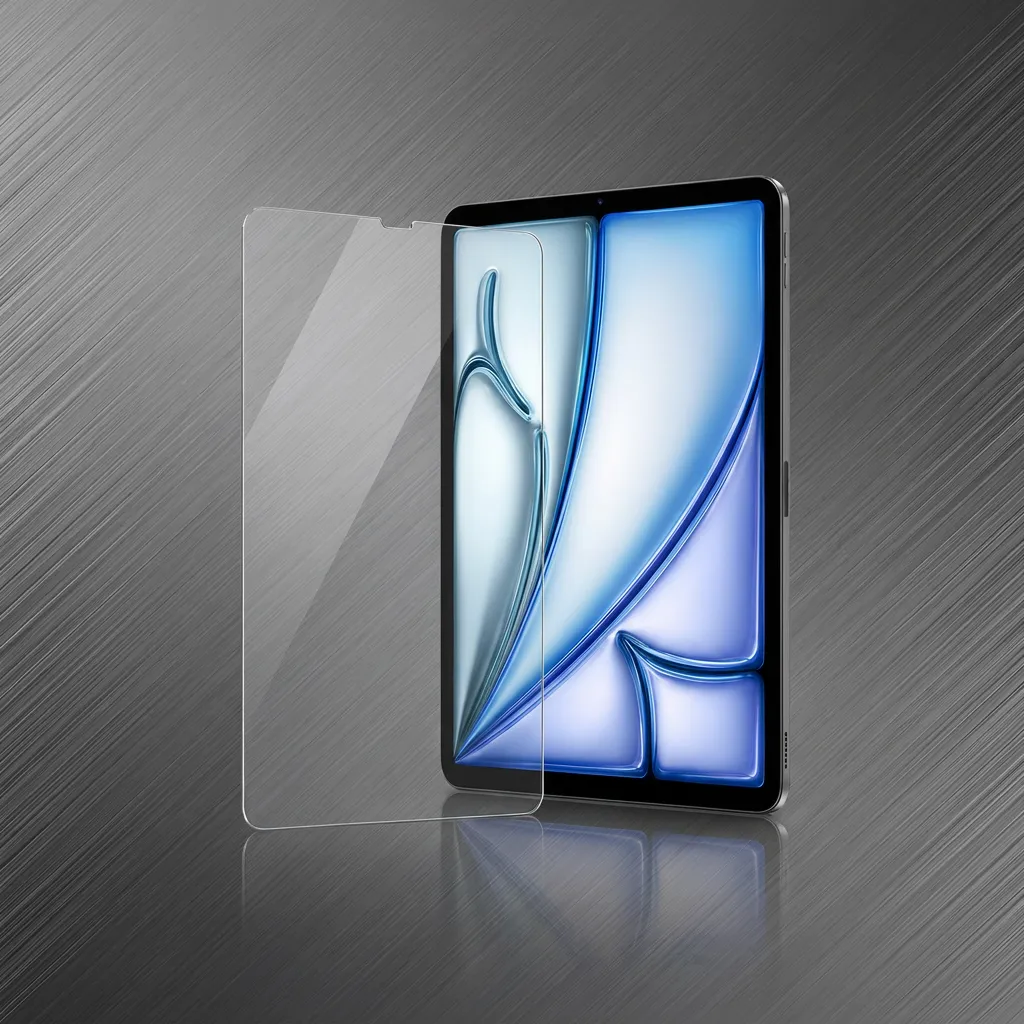
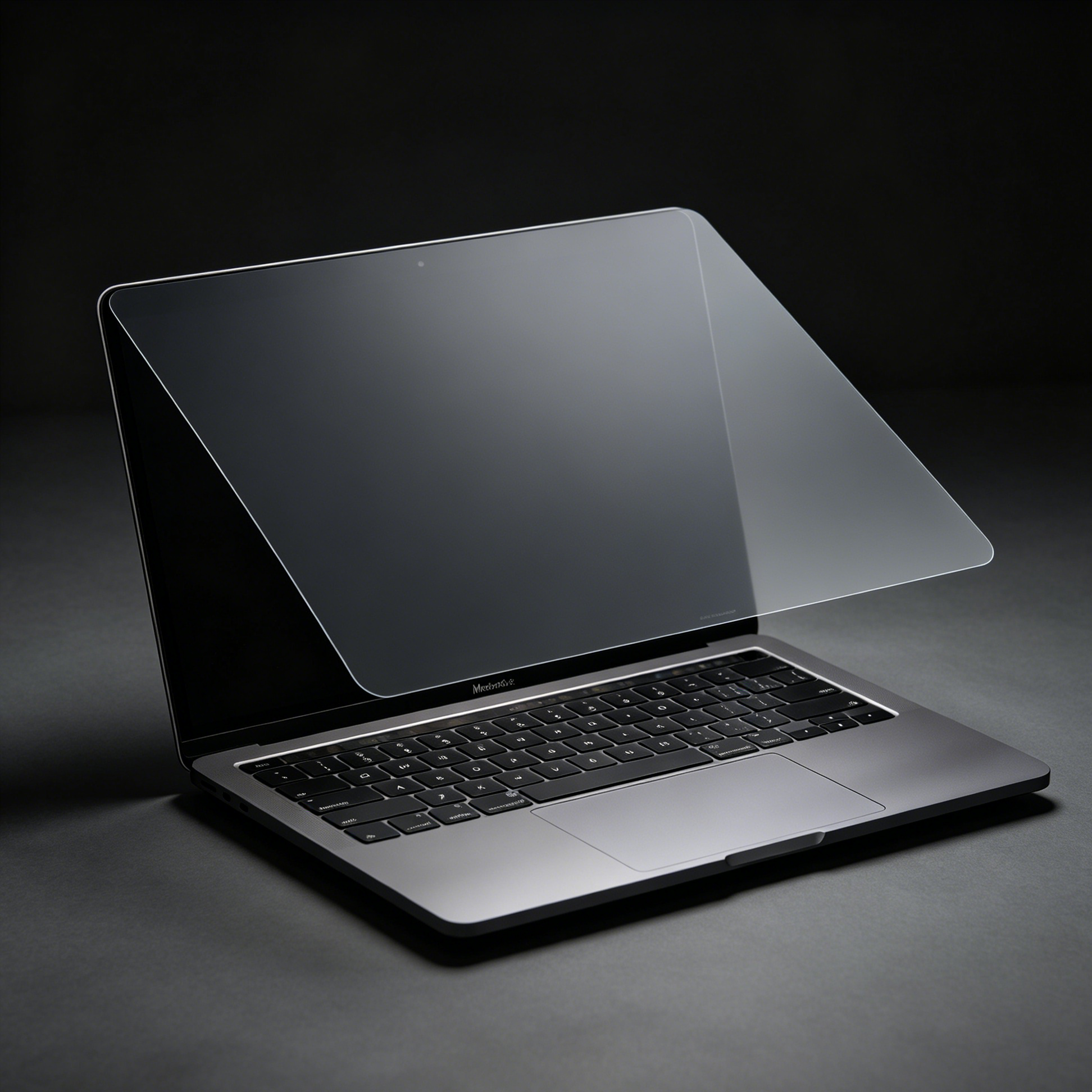
AR and anti-glare screen protectors can both reduce distracting screen reflections, which is why the two terms are often used interchangeably.
From an optical perspective, however, they are two different technologies.
AR, short for anti-reflective, uses an optical coating to reduce reflections from the glass surface.
AG, short for anti-glare, uses a matte or micro-textured surface to scatter reflected light.
Both can make a screen easier to view in bright environments, but they produce different results in terms of image clarity, surface feel, and overall viewing experience.
In simple terms:
AR prioritizes clarity, detail, and a glass-like appearance.
AG prioritizes a soft, matte, low-reflection finish.
Understanding the difference can help you choose the right screen protector for the way you actually use your device.
When ambient light reaches a glass surface, some of it passes through the glass while some is reflected back toward the viewer.
Under near-normal viewing conditions, each air-to-glass interface of uncoated glass reflects a portion of the incoming light. The exact amount depends on factors such as the glass material, surface coating, angle of incidence, adhesive layer, and overall screen construction.
This is why you may see your face, a nearby window, or overhead lights reflected on your phone when using it outdoors, beside a window, or under bright office lighting.
These reflections appear on top of the content displayed by the screen, reducing the effective contrast between text, images, and the background.
To compensate, users often increase screen brightness, change the viewing angle, or move away from the light source.
The way a screen protector manages reflected light determines whether the screen remains clear and transparent or takes on a softer, matte appearance.
There are two common ways to reduce screen reflections.
AR technology uses an optical coating on the glass surface to reduce reflections under specific wavelengths and viewing angles.
Its goal is to minimize distracting reflections while preserving as much of the screen’s original clarity, color, and detail as possible.
AG technology uses a matte, etched, or micro-textured surface to scatter reflected light in multiple directions.
This prevents a sharp mirror-like reflection from forming, giving the screen a softer and less reflective appearance.
However, the surface texture can also scatter some of the light coming from the display. As a result, the image may show a small amount of haze, grain, or reduced sharpness.
Both technologies reduce glare, but they do so in fundamentally different ways.
An AR coating usually consists of one or more precisely engineered thin-film layers.
When light reaches these optical layers, reflections from different interfaces undergo changes in phase. With the right layer design, some reflected light waves partially cancel each other out, reducing the visible reflection.
This optical effect is known as destructive interference.
Similar technology is widely used on:
Camera lenses
Prescription glasses
Microscope optics
Display surfaces
Precision optical equipment
On a screen protector, the main advantage of an AR coating is that it reduces reflections while keeping the surface optically smooth.
Compared with a high-haze matte protector, a well-designed AR protector can usually preserve more of the screen’s original:
Text sharpness
Photo and video detail
Color performance
Glass-like transparency
AR performance can vary depending on the coating design, substrate, test wavelength, viewing angle, adhesive layer, and manufacturing quality.
Not all products labeled “AR” will deliver the same optical performance.
An AG screen protector reduces glare through microscopic surface texture.
Smooth glass creates relatively concentrated mirror-like reflections, which is why lights, windows, and faces can appear clearly on the screen.
The small surface irregularities of an AG protector scatter reflected light in different directions. This makes reflections less defined and less distracting.
This type of surface treatment is commonly used on:
Office monitors
E-readers
Drawing tablets
Industrial control displays
Devices used for extended document work
The main advantage of an AG protector is its soft, low-shine surface. Its matte texture may also appeal to users who prefer a paper-like feel when swiping, writing, or drawing.
However, because the texture can also scatter light emitted by the display, some AG protectors may cause:
Slightly softer text
Fine grain on white backgrounds
Sparkle or grain in darker images
Reduced visual crispness
Minor changes in color and contrast
In general, higher haze produces a more diffused reflection, but it may also result in a greater loss of image clarity.
| Feature | AR Anti-Reflective Protector | AG Anti-Glare Matte Protector |
|---|---|---|
| How it works | Uses an optical coating to reduce surface reflections | Uses micro-texture to scatter reflected light |
| Surface appearance | Smooth, clear, and glass-like | Soft, matte, and low-shine |
| Text clarity | Usually remains sharper | May appear slightly softened |
| Photos and videos | Better suited to preserving detail and color | May introduce mild haze or grain |
| Light reflections | Reduces reflection intensity | Diffuses and blurs reflections |
| Touch feel | Similar to standard glass | Noticeably matte or textured |
| Fingerprints | Depends on the quality of the oleophobic coating | Texture can make fingerprints less visible |
| Best for | Creators and users who prioritize image quality | Reading, office work, and users who prefer a matte feel |
| Main trade-off | More complex manufacturing and typically higher cost | Some loss of clarity |
The right choice depends on whether you care more about visual clarity or a matte, low-reflection surface.
Review or edit photos
Watch high-resolution or HDR video
Read small text
Use your phone outdoors or on public transport
Want to preserve the screen’s original transparency
Dislike the grainy appearance of matte protectors
Care about color, detail, and sharpness
AR protectors are generally better suited to users who want fewer reflections without significantly changing the way the display looks.
Regularly use your device under office lighting
Spend long periods reading documents or e-books
Prefer a softer, less reflective surface
Like a matte or paper-like texture
Do not mind a small amount of grain or reduced sharpness
Want fingerprints and mirror-like reflections to be less noticeable
AG protectors focus on reducing surface shine rather than preserving the display’s original optical appearance.
Screen reflections can reduce contrast and make text and images harder to see.
Under strong ambient lighting, users may instinctively increase screen brightness, change posture, or repeatedly adjust the viewing angle. Over long periods, these viewing conditions may contribute to visual discomfort.
Reducing reflections can make displayed content easier to see and may improve overall viewing comfort.
However, AR and AG screen protectors are not medical products and cannot solve every cause of digital eye strain.
When using a screen for long periods, it is also important to:
Maintain an appropriate viewing distance
Balance screen brightness with room lighting
Avoid placing strong light sources directly behind the screen
Look away into the distance at regular intervals
Blink normally
Take breaks from continuous screen use
A screen protector can improve reflection control, but it cannot replace healthy viewing habits.
Many products use terms such as “AR,” “anti-reflective,” “HD,” or “high transparency.” Actual optical performance can still vary considerably.
Before buying, check the following information.
Professional products may provide optical measurements such as:
Visible light transmission
Surface reflectance
Haze
Color difference
Test wavelength range
Test angle
Claims such as “HD clear” or “ultra-transparent” are difficult to evaluate when no supporting test information is provided.
When comparing products, also check whether the measurements were taken using comparable test methods and conditions.
Make sure you understand whether the product is:
A flexible PET film
A tempered-glass screen protector
AR-coated glass
An AG matte protector
A composite protector with integrated privacy technology
“AR film” is a broad term that may describe several different product structures.
When the product uses a tempered-glass substrate with an anti-reflective coating, a more accurate description is:
AR-coated tempered-glass screen protector.
You can compare reflections before and after installation by switching the display off and viewing it under the same lighting conditions and from the same angle.
A well-performing AR protector should reduce the intensity of reflected lights and surrounding objects, although some residual reflection may remain.
Photos and videos used for comparison should be captured using consistent angles, exposure, and lighting. Otherwise, the results may be misleading.
The AR coating is responsible for reflection control.
The oleophobic coating is responsible for helping resist fingerprints, skin oil, and smudges.
These are separate functions.
The way water forms droplets on the surface may indicate hydrophobic performance, but it does not prove that the product has an effective AR optical coating.
You should also check:
Coating durability
Cleaning instructions
Fingerprint resistance
Compatibility with alcohol-based cleaners
Warranty or quality guarantee
No.
A water-droplet test mainly demonstrates the surface’s hydrophobic or oleophobic properties.
On a surface with good water repellency, droplets usually remain rounded and can be wiped or rolled away more easily.
However, a standard tempered-glass protector can also include an oleophobic coating. Rounded water droplets do not prove that a product contains an AR optical coating.
The more reliable ways to evaluate AR performance are to review optical test data and conduct controlled reflection comparisons.
Multilayer optical films may show a subtle blue, purple, green, or other residual reflection at certain angles.
This can be caused by thin-film interference.
However, colored reflections alone cannot confirm the presence or quality of an AR coating. Adhesive layers, substrates, surface treatments, and other film structures may produce similar effects.
Optical test results, product construction, and controlled comparisons remain more reliable indicators.
Any additional material placed over a display may affect light transmission to some degree.
A high-quality AR coating is designed to reduce surface reflections while maintaining high light transmission.
Because less ambient light is reflected toward the viewer, the screen may appear cleaner and easier to read, even if the protector itself introduces a small transmission loss.
The actual result depends on the glass substrate, coating quality, adhesive layer, and the display itself.
AR describes an optical surface function. It does not determine the overall protective strength of the product.
When an AR protector uses tempered glass as its substrate, the glass layer can provide protection against everyday scratches and minor impacts. The AR coating is primarily responsible for reducing reflections.
A “9H” rating generally refers to a pencil-hardness test and indicates resistance to certain types of surface scratching.
It is not a drop-protection rating and does not mean the protector can withstand every impact.
Overall protection also depends on:
Glass thickness
Tempering process
Edge construction
Adhesive layer
Drop angle
Impact surface
Drop height
A 9H claim alone is not enough to evaluate the full protective performance of a screen protector.
Stacking two separate screen protectors is generally not recommended.
Using multiple layers may cause:
Reduced clarity
Lower screen brightness
Changes in touch sensitivity
Edge lifting
Bubbles or bonding problems
Reduced under-display fingerprint performance
Users who need both reflection reduction and side-view privacy should choose a protector that integrates both functions into a single product structure.
When an integrated product is unavailable, choose the feature that addresses your main concern.
At LUSA DESIGN, we believe the purpose of an AR screen protector is clear:
To reduce distracting reflections while preserving as much of the screen’s original clarity, color, detail, and glass-like feel as possible.
The LUSA DESIGN AR range combines a tempered-glass substrate with an anti-reflective surface treatment and an oleophobic top layer. It is designed for users who care about transparency, image detail, and everyday viewing quality.
Our installation system also helps reduce dust, misalignment, and trapped air during application.
For an optical screen protector, coating performance is only part of the experience.
Installation cleanliness, alignment, adhesive uniformity, and edge construction can all affect the final result.
Use this simple guideline.
Choose AR if you prioritize:
Image clarity
Fine detail
Sharp text
Video quality
A transparent, glass-like appearance
Choose AG if you prioritize:
A matte surface
Softer reflections
Reading and writing comfort
Reduced mirror-like shine
Less visible fingerprints
AR and AG are not simply better or worse versions of the same product.
They create different viewing experiences.
The right choice depends on which characteristics matter most to you.
No.
AR protectors use an optical coating to reduce reflections and generally preserve more image clarity.
AG protectors use a matte or micro-textured surface to scatter reflections, which may introduce a small amount of haze or grain.
AR protection can reduce ambient-light reflections, making content easier to see outdoors, beside windows, or on public transport.
However, outdoor visibility will also depend on the display’s peak brightness, viewing angle, and the intensity of the surrounding light.
It can.
The micro-texture that scatters reflected light may also scatter light emitted by the display.
The amount of visible change depends on the product’s haze level and surface structure. Low-haze AG protectors usually cause less softness, while high-haze products create a stronger matte effect and more visible grain.
Usually not.
AR technology is designed to reduce reflection intensity. It does not eliminate every reflection at every wavelength and viewing angle.
Some residual reflection may still be visible under strong lighting or at certain angles.
Use a clean, soft microfiber cloth and wipe the surface gently.
When cleaning fluid is required, follow the product instructions. Avoid abrasive cleaners, rough paper towels, and sharp tools that may damage the surface coating.
Users who care about screen sharpness, color, and image detail will generally find AR more suitable than a high-haze AG protector.
However, a phone or tablet display is not a replacement for a professionally calibrated monitor. Accurate color-critical work should still be performed on properly calibrated equipment.
AR and AG both reduce screen reflections, but they create two different visual experiences.
AR focuses on clarity, transparency, and detail preservation.
AG focuses on a soft, matte, low-shine surface.
Before buying, look beyond the words “anti-glare” on the packaging.
Decide whether you care more about preserving image quality or achieving a matte feel, then choose the technology that best matches how you use your screen.
Explore the LUSA DESIGN AR collection for compatible iPhone, iPad, and MacBook models, and find the screen protection solution that fits your viewing habits.