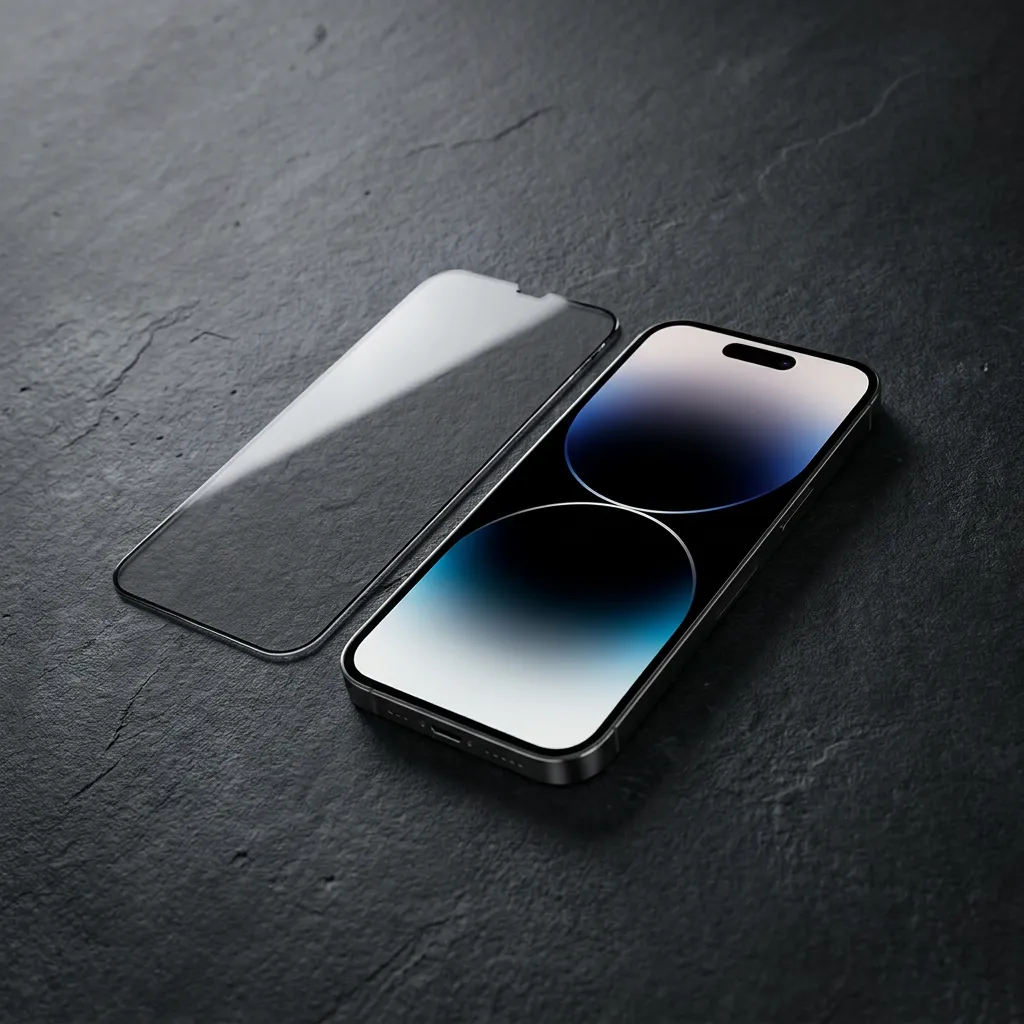
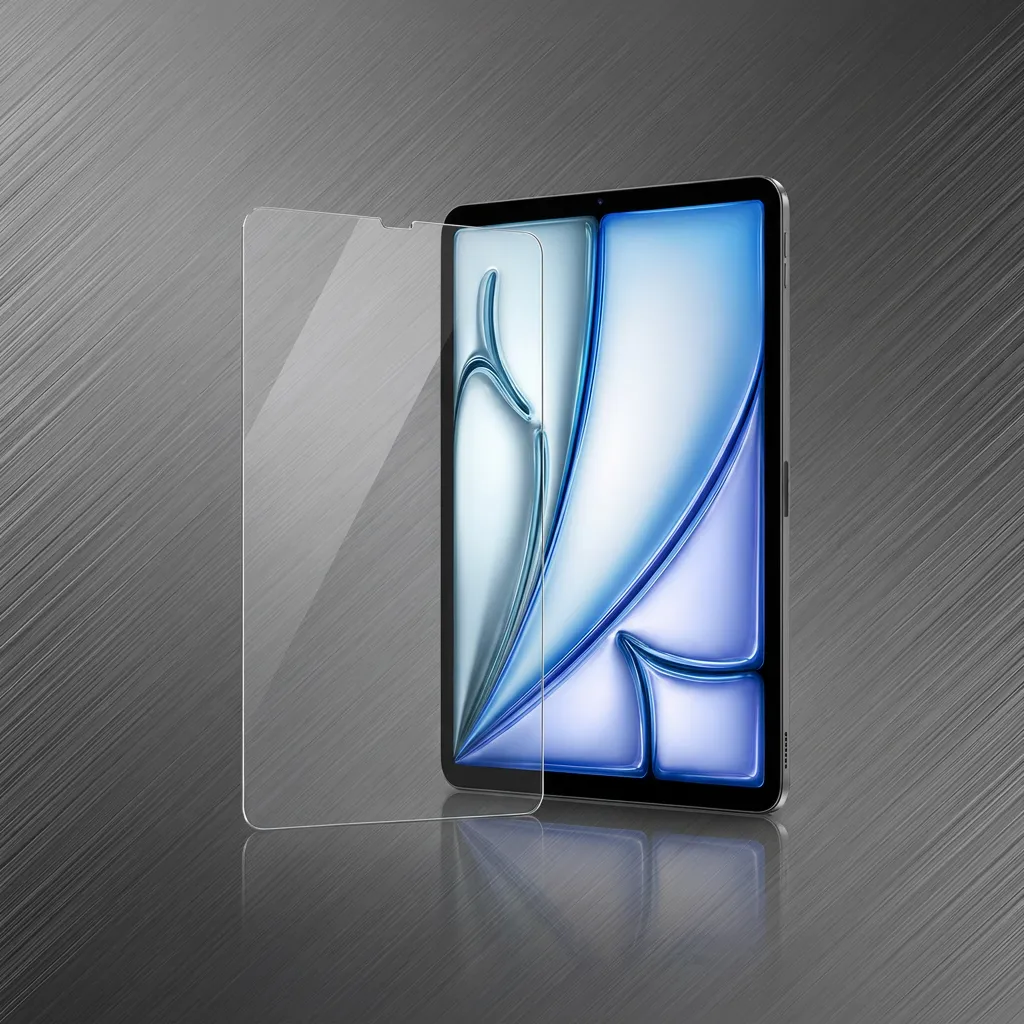
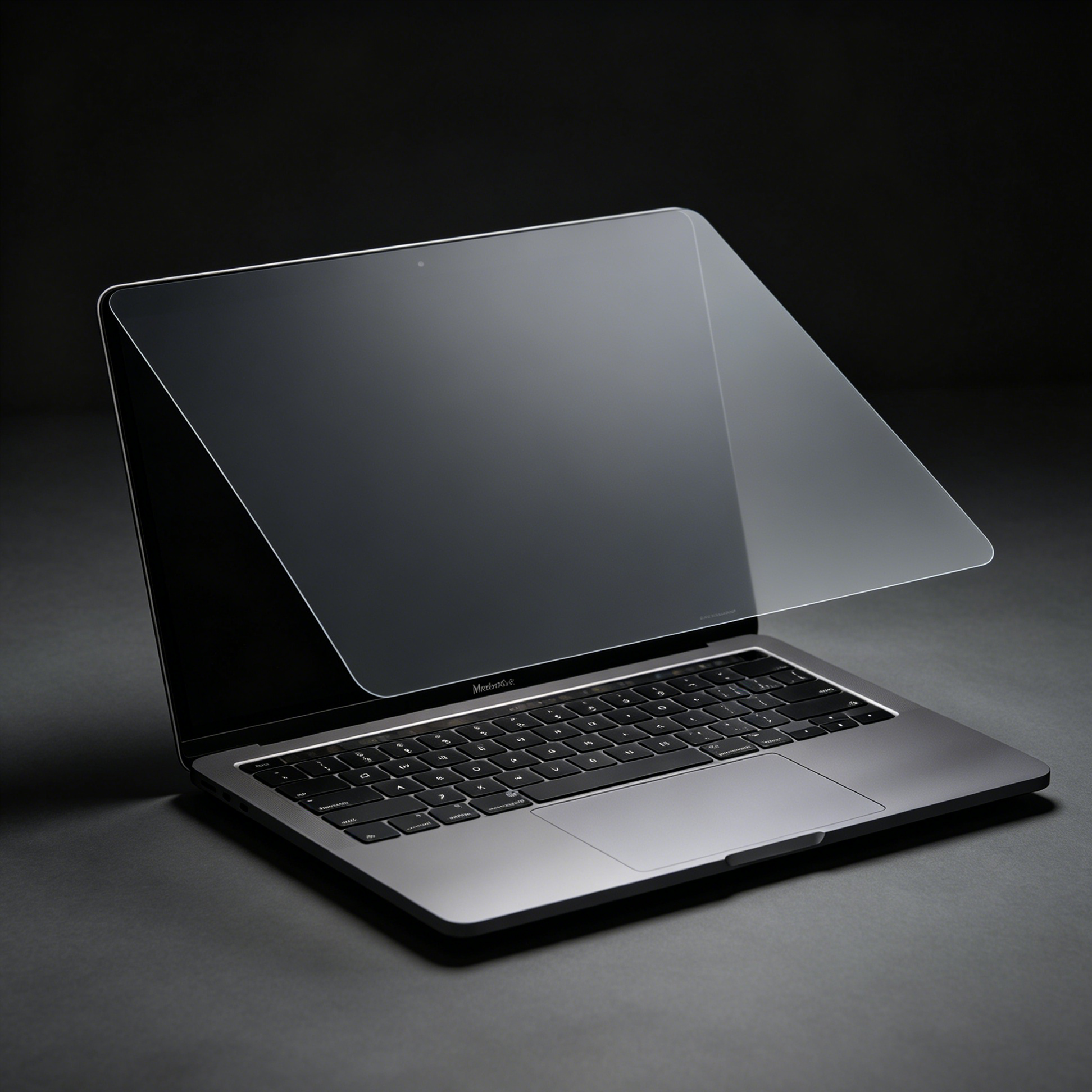
An anti-reflective screen protector is a glass or film sheet whose surface carries thin-film layers that cancel reflected light instead of scattering it. Whether that is worth paying for comes down to one question: is glare the thing that actually ruins your screen, or is it scratches? The two problems have different fixes, and buying the wrong one is why so many people conclude screen protectors "do nothing."
This piece works through the optics, the honest limits, and the numbers you can check yourself — so the decision takes two minutes instead of another round of reviews.
The short answer. Yes, if reflections are your problem. An anti-reflective coating drops surface reflectance from roughly 4% to around 1%, and in direct sunlight that reflected glare is the single largest reason a phone screen looks washed out — often brighter than the image itself. No, if you mainly want drop protection: plain tempered glass does that for less. And no, if the concern is someone reading your screen on the train — that needs a louvre layer, not a coating. An anti-reflective screen protector is a clarity product, not a privacy product.
Definition: an anti-reflective screen protector — also sold as AR film, AR glass or anti-reflection protector — is a transparent screen layer treated with one or more optical coatings whose thickness is tuned to the wavelength of visible light. The coating does not absorb light or darken the image. It makes the reflected wave cancel itself out.
That distinction matters, because three products get confused constantly:
If you have read our breakdown of AR versus matte film, this is the same distinction seen from the buying side rather than the physics side.
Every time light crosses from air into glass, a fraction bounces back. For ordinary glass with a refractive index around 1.5, that fraction is about 4% — the Fresnel reflection. It is the same reason you see a faint ghost of your own face in a shop window.
A screen protector doubles the problem. A film bonded to the display creates a second interface where light passes from the film back into air, so a plain uncoated protector reflects roughly twice as much as the bare screen: about 8% instead of 4%. That is not a small difference in practice. It is why some cheap protectors make a phone feel harder to read in daylight than no protector at all.
An AR coating fixes this at the interface. A layer roughly a quarter of a wavelength thick, with a lower refractive index than the glass beneath it, produces a second reflection that is half a wavelength out of phase with the first. The two cancel. Stack several of these layers and you can suppress reflection across the whole visible spectrum rather than at one colour.
 Same wavelength, half a cycle out of phase. The two reflections cancel.
LUSA DESIGN rates its AR range at 98% optical clarity with reflectivity below 1.2%. Treat that as a manufacturer's claim, not a lab result — the useful question is always measured how, and the answer should be a gloss or reflectance reading at a stated geometry, not a marketing adjective.
Here is the calculation that makes the case better than any product page. Reflected luminance from a matte surface is roughly illuminance multiplied by reflectance, divided by pi. Direct sunlight at noon is about 100,000 lux. A phone display at full brightness is 600 to 1,000 nits.
 Reflectance, and the glare it produces in direct sunlight. Lower is better.
| Surface | Reflectance | Glare in direct sun | What you actually see |
|---|---|---|---|
| Bare phone glass | ~4% | ~1,270 cd/m² | Image washes out; you angle the phone |
| Uncoated clear protector | ~8% | ~2,550 cd/m² | Worse than no protector at all |
| Matte / anti-glare film | 1–2%, scattered | ~320–640 cd/m² | Readable, but text looks soft and grainy |
| AR-coated glass | ~1.2% | ~380 cd/m² | Image holds; reflection is a faint tint |
| Laminated AR + AG | ~0.8% | ~255 cd/m² | Near-invisible reflection, mild softness |
Read the second row again. At 8%, reflected glare of about 2,550 cd/m² is two to four times the brightness of the display itself. The screen is not "a bit washed out" — the reflection is, optically, the brightest thing on the surface. No amount of brightness slider fixes that, because turning up the display does not dim what the sun is doing to the glass.
At 1.2%, the same sunlight produces roughly 380 cd/m² of glare — well under the display's own output. That is the entire value proposition, and it is measurable rather than rhetorical. Note also that the calculation is deliberately rough: angle of incidence, screen finish and ambient surroundings all move the number. The ordering does not change.
1. You work outdoors or beside a window. Field work, site visits, deliveries, patios, anywhere the sky or a bright window is behind you. This is the case where the arithmetic above translates directly into a usable screen.
2. You shoot or edit photos and video on the phone. Reflected light does not just obscure the image — it changes your perception of contrast and colour. Editors who grade on a glossy screen in a bright room routinely push shadows too dark, because glare is compressed into the shadows they are judging.
3. You read long-form text. A novel, a PDF, a spec sheet on a job site. Legibility at small type sizes depends on contrast, and contrast is exactly what reflection destroys first.
4. You use a car mount or navigation in daylight. Windshield glare is the worst-case geometry: bright source, fixed angle, no way to tilt the phone out of it.
In all four, AR is doing something the display cannot do for itself. That is the test for whether an accessory earns its price.
Three honest limits, because a product page will not list them:
And one more: AR does nothing about someone reading your screen. That is a direction problem, handled by a privacy film rather than an AR film, and the two are frequently bought by mistake for each other.
| Anti-reflective (AR) | Matte (AG) | Privacy | |
|---|---|---|---|
| Mechanism | Cancels reflection by interference | Scatters reflection on a texture | Blocks light by angle |
| Glare | Removed, reflection stays crisp | Spread into a soft haze | Unchanged |
| Sharpness | Full — pixels untouched | Reduced, slight grain | Reduced at a distance |
| Brightness cost | Near zero | Low | Noticeable, 20–40% |
| At 45° off axis | Readable | Readable, hazy | Dark |
| Best for | Outdoors, photography, reading | Fixed overhead lighting, gaming | Commuting, open offices, travel |
The category has a quality problem: some films sold as anti-reflective are simply grey-tinted plastic. Tint raises perceived contrast by dimming everything, which feels like less glare and is not. Five checks, all doable at home:
These overlap with the tests in our anti-glare versus anti-reflective comparison, which is the piece to read if you are still deciding between a coating and a texture.
Our AR range is built around the same trade-off: cancel reflection at the surface, then leave the pixels alone. Three ways in, depending on what you are protecting:
 Contrast under strong light: AR film on the left, an untreated screen on the right.
If you already know you want an anti-spy layer rather than a coating, start from the privacy screen protector collection, where the 20°, 180° and 360° versions sit side by side. The 20° film for iPhone 18 Pro Max at USD 19.99 is the narrowest cone we make and the right choice for a phone you hold, not one you pass around.
One buying note that saves returns: AR does not replace hardness. If you drop your phone weekly, buy for impact first and treat glare as the second requirement.
Yes, if glare is what bothers you. An AR coating cuts surface reflectance from about 4% to roughly 1%, and in direct sunlight the reflection is often brighter than the display itself, so removing it changes readability more than any brightness setting. They are not worth it if you mostly want drop protection or privacy.
A good one does not. Because AR works by cancelling reflection rather than absorbing light, the pixels pass through unaltered, which is why AR films are specified at high clarity figures such as 98%. A tinted imitation is a different story: it dims everything and shifts colour, which is the tell to watch for.
Anti-reflective, if you care about text sharpness. Matte film spreads glare into a haze, which is comfortable, but the same texture scatters the pixels and slightly softens small type. AR keeps the reflection crisp and out of the way, so the image stays intact. Matte wins on one point: it hides fingerprints and face smudges better.
Far less than a privacy film. There is a small transmission loss from the coating stack, typically low single digits, and it is invisible at normal indoor brightness. A privacy film is a different order of magnitude, because angle filtering removes a share of straight-on light as well.
No. The coating handles light; impact resistance comes from the glass substrate and its edge design. AR glass is still tempered and will absorb a drop like any tempered protector, but the anti-reflective layer adds nothing to that. Do not buy AR as a screen-protection upgrade.
Yes, as a laminated film — anti-reflective treatment on top, micro-louvre layer beneath. Our 180° AR privacy sheet is built this way. It costs a little brightness compared with pure AR, because the louvre layer is still doing its job.
Less so. Indoors, ambient light is hundreds of times lower than sunlight, so the reflected glare you are removing is already small. The exceptions are a desk under a window or directly beneath an overhead fixture, where the geometry puts a bright source in the reflection path.
Our AR tempered glass for iPhone 18 Pro Max is cut for that chassis, including the camera and sensor array. For 15, 16 and 17 Pro the two-pack covers those models.
Anti-reflective film is worth it when your problem is light, and a waste when your problem is gravity. The physics is unusually clean for an accessory: a reflectance figure of 1% against 4% is not a preference, it is a fourfold reduction in the brightest thing on your screen in daylight. And unlike most spec-sheet claims, you can check it at home with a lamp and a dark room.
If you have ever tilted your phone away from a window to read a message, you already know which product you need. If you have ever dropped your phone on a kerb, you need the glass, and the coating is the bonus.
Related reading
Glare figures above are calculated from illuminance, reflectance and a Lambertian assumption, and are indicative rather than measured. Written by LUSADESIGN. Last updated 17 November 2026.