You are on the 7:42 and the man in the next seat is looking at your screen. He is not reading your messages. He cannot: from 60 cm, at that angle, at that font size, the words are noise. He is doing something more efficient. He is watching a rectangle change colour, and that alone tells him you are checking a balance, swiping through photos, or looking at a map with a pin on it.
This is the part of screen privacy almost nobody explains properly. The industry sells "nobody can read your screen", and the reply is always "nobody wants to read my screen". Both sides are arguing about text. Text is the smallest part of the problem.
The short answer. Your messages are not readable from six feet away — two millimetre text stops resolving at about 1.4 m for normal vision. What is readable is everything larger than text: a photo, a balance, a map, an app colour and layout, and the two lines of a notification banner. A privacy screen protector does not hide the words. It removes the contrast that makes those shapes visible outside a narrow viewing cone, so a glancing neighbour gets a dark rectangle instead of your afternoon.
Start with the numbers, because they cut against the thing we sell.
Normal vision resolves about one arcminute of detail. Reading a letter takes roughly five arcminutes of letter height. Body text on a phone is about 2 mm tall. Put those together and 2 mm letters stop being legible at about 1.4 m. Six feet is 1.83 m. So at six feet your messages are genuinely unreadable, and anyone who says otherwise has not tested it.
This is why the argument goes nowhere. The person who says "nobody can read it" is right about text. The person who says "your screen is public" is right about something else, and neither of them names it.
Legibility is not a binary. It is a gradient, and the things on your screen are not all the same size.

Five things, roughly in order of how much they give away:
There is one more that is not an object: the keyboard going up and down. A search, a password, a long message, a form with many fields. The rhythm is legible even when the letters are not.
Put those together and a glance delivers a sentence your screen never printed: he is checking his balance before he pays; that is a photo of a child; he is on a dating app; he is reading a message from a hospital; he is looking at a spreadsheet with numbers in it.
Text tells a stranger what you wrote. Context tells him what you are doing and how you feel about it, and context is the thing that survives the distance.
That changes what you should do about it. If the leak were text, the fix would be a smaller font. Because the leak is context, the fix has to flatten the screen's contrast at every angle except yours.
Peak brightness. Flagship panels that advertised four figures in nits a few years ago now quote peak brightness in the low thousands. That is genuinely useful on a sunny sidewalk. It also raises the contrast between your screen and the room, and contrast is the quantity a passer-by is actually reading. A brighter screen is not more private. It is a brighter rectangle.
Always-on displays. A dead-black phone is private. A phone lying face up with a clock, a wallpaper and three notification icons is a small billboard running all day, pointing at the room rather than at you. This one costs nothing to fix and almost nobody fixes it.

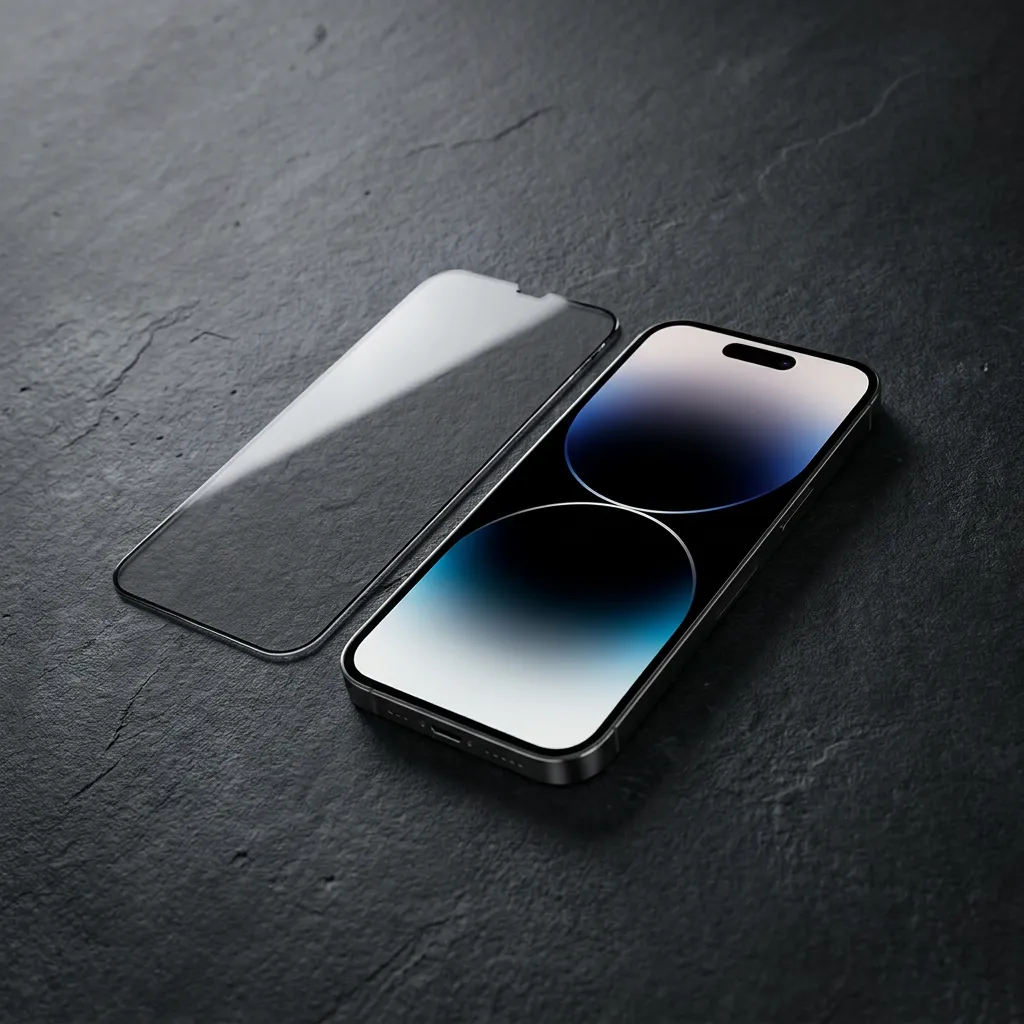
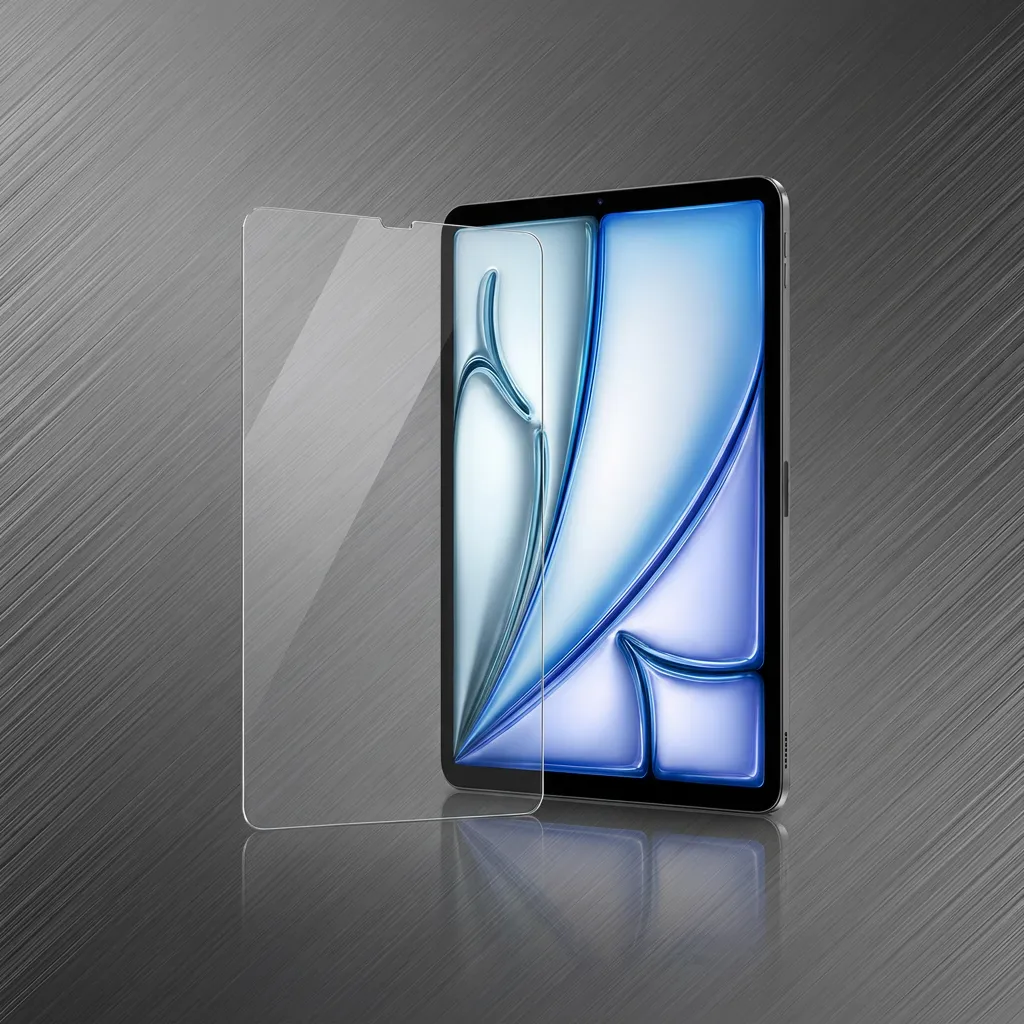
Definition: a privacy screen protector — also sold as an anti-spy screen protector, privacy film or privacy filter — is a thin glass or film layer containing thousands of microscopic opaque louvres, angled like window blinds. It does not blur the screen and it does not encrypt anything. It filters light by direction.
Not dim the screen. Remove the contrast outside a narrow cone.
A louver film is thousands of microscopic opaque blades standing inside the adhesive, like window blinds at a scale you cannot see. Light leaving the panel straight ahead passes between the blades; light leaving at 40 degrees hits a blade and is absorbed.
Which means the right way to judge one is not "how dark does it look from the side". It is: does the screen read as a rectangle, or as content? A film that leaves a faint, low-contrast version of your photo visible at 45 degrees has failed at the only job it had. A film that turns the panel into a uniform dark slab has done it.
That is also why "40 percent dimmer" is a meaningless spec on its own. Two films can cost you the same 30 percent of brightness and behave completely differently at 45 degrees.
This is the question that decides most purchases, and the two products are usually compared as if they were rivals. They are not: one is about who can see the screen, the other is about what the screen reflects.
| Privacy screen protector | Anti-reflective (AR) film | |
|---|---|---|
| Job | Narrow the viewing cone | Kill reflections and glare |
| What it solves | The person beside you | The sun behind you |
| Brightness | Costs you forward brightness, visible outdoors | Gains perceived contrast in daylight |
| At 45° off axis | Dark, unreadable | Fully readable: reflections gone, content intact |
| Best for | Trains, flights, open offices, clinics | Outdoor photography, editing, bright rooms |
If you want both, you want a laminated AR privacy film — the anti-glare layer on top, the louvre layer underneath — which is the only way one sheet can cut reflections without giving back the angle protection. The full comparison of privacy versus AR film goes through the trade-offs in detail.

On a phone you hold, the geometry is short and the answer is simple. At 40 cm, a 20° cone is about 14 cm wide, wider than the screen. The neighbour's eyes, half a metre to the side and a little closer, sit at 55 to 65° off axis. Anything from 20° inward covers that seat, and covers it completely.
Which is why we tier by angle rather than by darkness: a 20 degree film for a phone in your hand, a 180 degree film when you still want to hand the phone across a table, and a 360 degree film only if the phone spends its day face up on shared surfaces. If the naming is still fuzzy, the guide to what 20, 180 and 360 mean takes it apart.
Those four solve more of the problem than a film does. Buy the film for the part they cannot fix: the screen you are actively looking at, in a place where strangers sit close enough to read a shape.
Not the body text. Two millimetre letters fall below readable detail at roughly 1.4 m, and six feet is 1.83 m. Anything set in large type, any photo, any map, any app colour, and any lock-screen preview is still readable at that distance. That gap is the whole subject of privacy film.
Inside their stated angle, yes. A 20° film transmits light only within about 10° of centre, so a person sitting 55° off axis sees a dark panel rather than a dim one. A cheap film that only tints the glass, without louvres, dims the screen for everyone and protects nobody.
It is a louvre film whose clear viewing cone totals 20°, meaning 10° either side of straight-on. Held at 40 cm, that cone is about 14 cm wide across the screen — wider than the display, narrower than the seat next to you. It is the standard choice for a phone you hold.
It is worth it if your phone is used in public: commuting, flights, open-plan offices, waiting rooms. It is not worth it if the phone mostly lives at home. Judge it against one leaked balance screen or one photograph of a child, not against the price of the film.
Yes, and it has to. Angle filtering works by removing light that leaves at an angle, and a small share of straight-on light goes with it. Expect a visible step down in brightness in daylight and almost none indoors. Two films with the same brightness loss can still differ completely at 45°.
No, on all three, if it is fitted correctly. Films are cut around the front camera and sensor array, touch response passes through the adhesive layer unchanged, and the added thickness is around a third of a millimetre — inside the tolerance of normal cases. A misaligned film is the usual cause of a sensor complaint.
Anti-reflective film if the problem is glare: sun behind you, reflections of office lights, a screen that behaves like a mirror outdoors. Privacy film if the problem is people: someone beside you on a train or at a desk. If both are true, choose a laminated AR privacy film rather than two separate sheets.
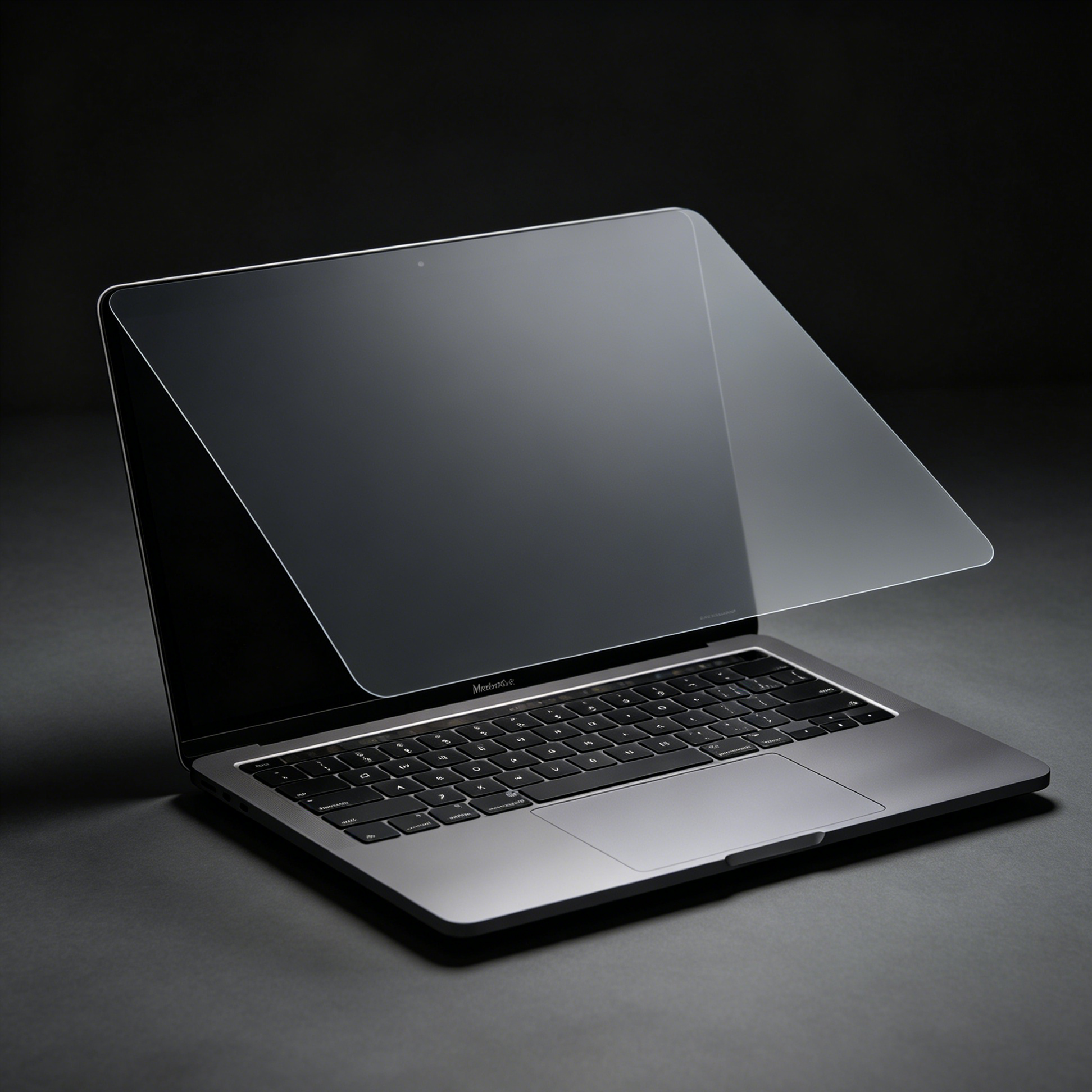
More than to a phone, because a laptop screen is bigger, brighter and often faces a room. The angle logic is identical; the fitting is different, and a magnetic privacy screen for a MacBook Air 15 avoids adhesive entirely — here is the magnetic versus adhesive comparison.
Nobody is reading your messages. They are reading the shape of your day. Text dies at 1.4 m; a photo, a balance and an app's colour do not die at all. A privacy film does not exactly make your screen darker — it makes the screen stop being content at the angles where other people actually sit. That is a smaller promise than "nobody can see your screen", and it is the one that holds up.
Browse the privacy films we make, or if you want the checking side of this, the six-test checklist covers what to look at with one in your hand.
Related reading
Written by LUSADESIGN. Last updated 16 November 2026.