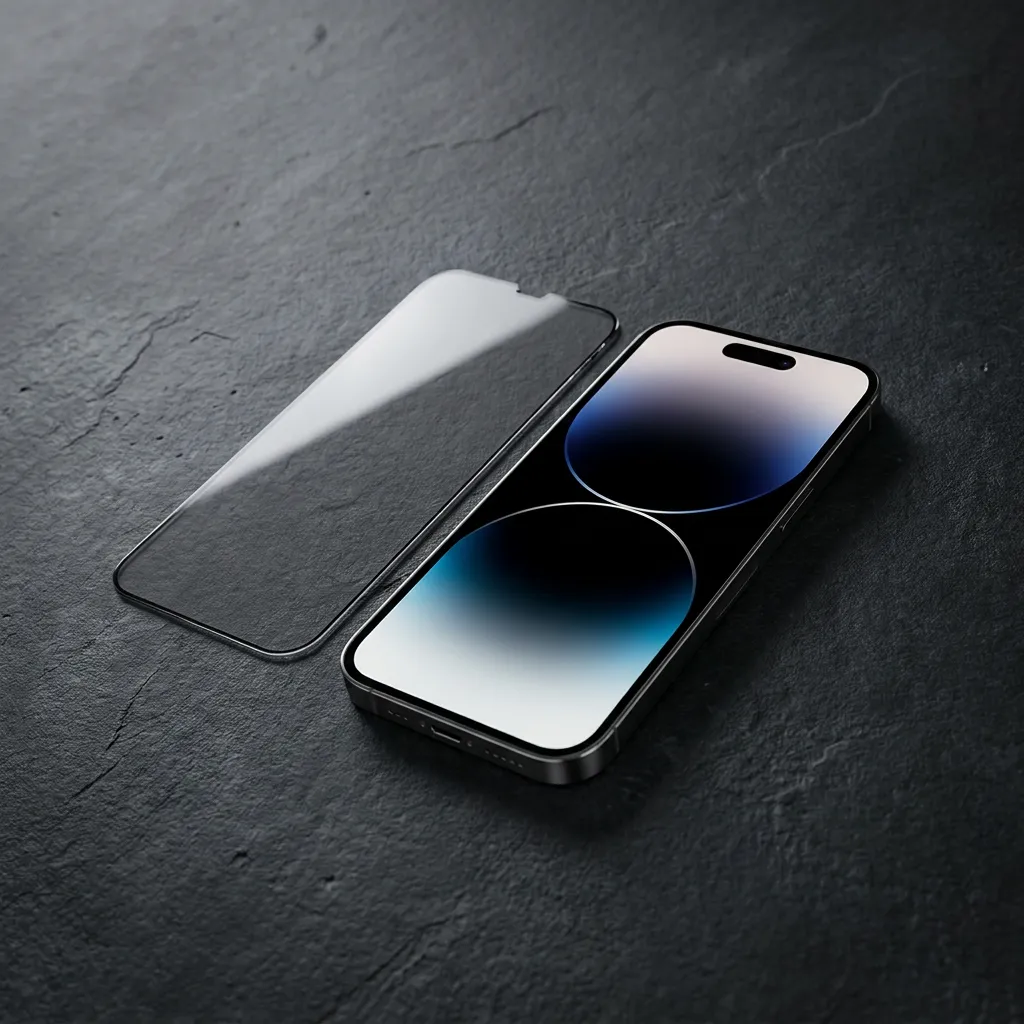
After an iPhone hits the ground, the first question is often, “Did only the protector crack, or is the display damaged too?” A calm inspection is safer than immediately peeling away broken glass. The protector may still be containing fragments, and the phone should be checked for more than a visible line.
Pick up the phone by the case or undamaged edges. If loose glass is present, do not swipe a bare finger across the surface. Move the phone to a stable, well-lit table. Disconnect charging accessories and remove the case only if it can come off without pulling on cracked glass.
If the phone is bent, unusually hot, swollen, leaking, or giving off an odor, stop using it and seek qualified service. A screen protector cannot address structural or battery damage.
Turn the display off and angle it under a side light. A protector crack may end at the protector border, while damage below can appear deeper or remain visible when the surface reflection changes. This visual check is useful, but it is not conclusive. Do not press the crack to see whether it moves.
A phone can have a cracked protector and a working display, or both layers can be damaged. Display artifacts, dead touch zones, or frame deformation are reasons to arrange service instead of treating the problem as a protector-only repair.
If the protector has a small stable crack, no loose fragments, and normal touch response, leaving it in place until a replacement is ready may reduce handling of the bare screen. Keep the phone away from moisture and avoid pressure on the damaged area. Replace it promptly if the crack spreads, an edge lifts, or fragments begin to separate.
The LUSA DESIGN Anti-Glare / Anti-Reflective 2-Pack Glass includes two protectors and a dust-free installation chamber according to the listing. Keeping a matched spare means a damaged outer layer can be replaced without waiting for another shipment or using the phone unprotected.

Confirm the exact iPhone model before ordering. A spare for another generation or size is not a reliable substitute, even when both phones look similar.
Back up important data first. Work over a clear table, wash and dry your hands, and follow the product instructions. If broken glass is sharp or difficult to control, a repair professional is the safer option. After removal, inspect the bare display before applying new glass. That is the clearest moment to determine whether the protector absorbed the visible damage.
Take photos of the phone, protector, case, and impact point before discarding anything, especially if you may contact support or insurance. Record whether touch, cameras, charging, and Face ID still work. A short checklist prevents a cosmetic crack from distracting you from a more important symptom.
The goal is not to prove that every crack is harmless. It is to inspect safely, protect the device from additional handling, and separate protector damage from signs that require service.