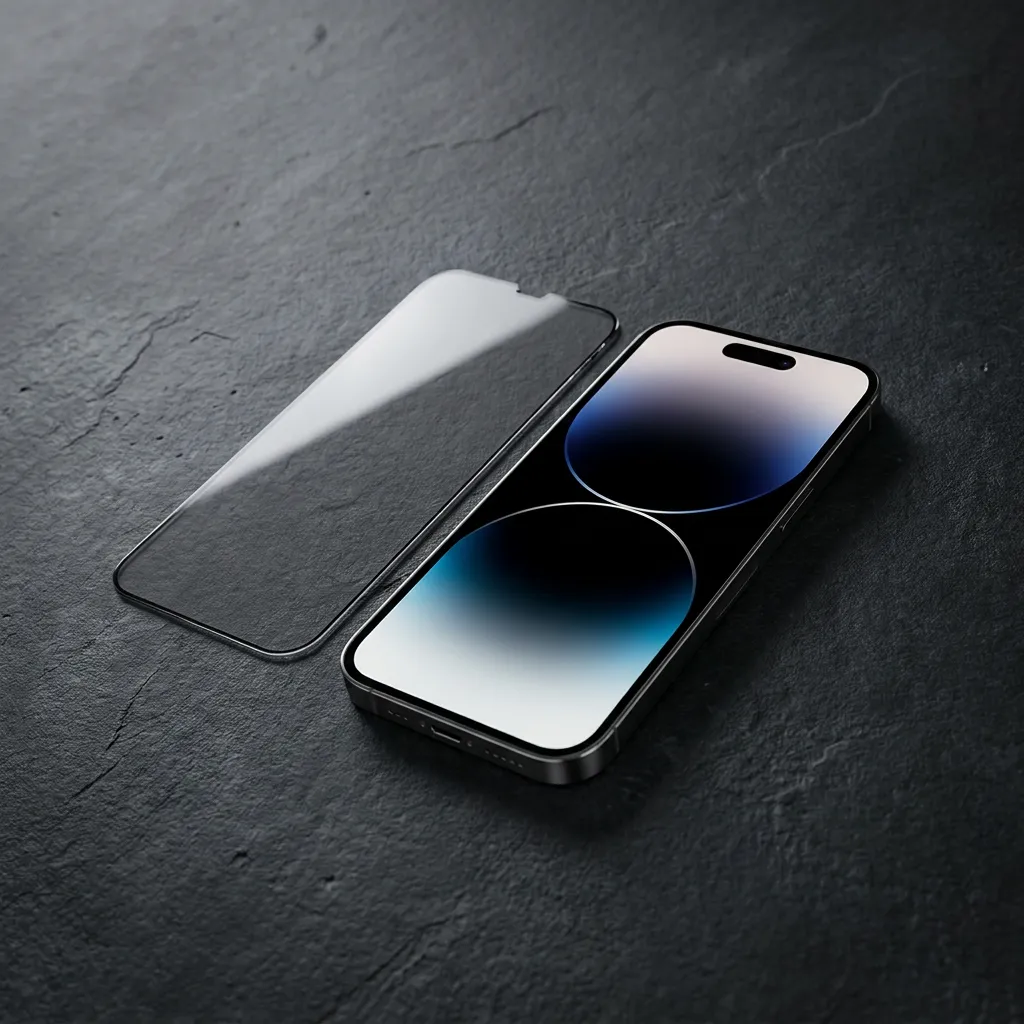
A screen protector collects fingerprints, skin oil, dust, makeup, and pocket debris every day. Cleaning it seems simple, but the wrong cloth or cleaner can gradually damage the surface coating, leave fine scratches, or weaken the adhesive around the edges.
The safest cleaning method depends on the protector’s construction. Clear tempered glass, privacy glass, anti-reflective glass, and matte films may look similar, but their surface treatments are different.
This guide explains how to clean a screen protector safely, what products to avoid, and how to recognize when the surface coating is beginning to wear out.
Many premium screen protectors include an oleophobic top coating. This coating helps reduce the amount of skin oil and fingerprints that remain on the surface. It also makes the screen feel smoother when you swipe or type.
An anti-reflective screen protector may include a separate optical coating designed to reduce reflections. The anti-reflective layer and the oleophobic layer perform different functions.
Aggressive cleaning does not normally destroy a tempered-glass protector immediately. The damage is usually gradual. Repeated use of abrasive materials or strong household cleaners can make the surface feel rougher, attract fingerprints more quickly, or develop visible micro-scratches.
Apple similarly advises using a soft, lint-free cloth and warns that abrasive materials and some cleaning products can reduce the effectiveness of an oleophobic coating.
For routine cleaning, prepare:
Use a microfiber cloth that is reserved for screens or lenses. A cloth that has already been used on a desk, car interior, or kitchen surface may contain hard particles that can scratch the protector.
Wash reusable microfiber cloths regularly. Avoid fabric softener because it can leave residue on the fibers.
For normal fingerprints and light dust, follow these steps.
A dark screen makes fingerprints, streaks, and dust easier to see. Disconnect the charging cable before cleaning.
Before wiping, inspect the screen for sand, metal particles, or other hard debris.
Use a clean, dry microfiber cloth with very light pressure. Do not press loose particles across the glass.
Fold the microfiber cloth into a clean square and wipe from one side of the screen to the other.
Heavy circular rubbing is unnecessary. Excessive pressure can push dirt into the surface or place stress on the protector’s edges.
For stubborn fingerprints, slightly dampen one corner of the cloth with water. The cloth should feel barely damp, not wet.
Never pour or spray liquid directly onto the phone. Liquid can run into the speaker, charging port, buttons, or the adhesive layer around the protector.
Use the dry section of the microfiber cloth to remove any remaining moisture or streaks.
Wait until the screen is completely dry before reinstalling the phone case.
Alcohol should be used carefully.
Apple states that certain 70 percent isopropyl alcohol wipes may be used gently on compatible device surfaces. However, that guidance applies to Apple products and does not automatically confirm compatibility with every third-party screen protector or coating.
A screen protector may have its own oleophobic, hydrophobic, anti-reflective, matte, or privacy surface treatment. Repeated exposure to alcohol can shorten the useful life of some coatings.
Use the following rule:
Water is usually enough for daily maintenance.
A privacy screen protector uses an optical filtering structure that limits visibility from certain side angles.
Clean it with the same basic method used for clear glass:
Do not scrub aggressively because fingerprints appear more visible on darker privacy surfaces, especially when the screen is turned off. More pressure will not necessarily remove them faster.
If the privacy effect appears uneven after cleaning, check for streaks, moisture near the edge, or trapped dust. Cleaning normally does not change the privacy angle unless the protector has been physically damaged.
An AR screen protector is designed to reduce surface reflections while maintaining image clarity. Its optical coating should be treated as a precision surface.
Use:
Avoid abrasive polishing products. Attempting to “polish out” a scratch may create a larger uneven area in the optical coating.
A water-droplet test can demonstrate surface water repellency, but it does not prove the condition or quality of the AR coating. Anti-reflective performance and oleophobic performance come from different surface functions.
Dust and skin oil often collect where the protector meets the phone case.
Remove the phone case before cleaning. Use a dry microfiber cloth or a soft brush to clean the case separately.
Do not insert sharp tools beneath the protector. A toothpick, metal pin, blade, or fingernail can damage the adhesive and start edge lifting.
If dirt has already entered beneath the glass, cleaning the top surface will not remove it. Lifting and reinstalling a fully bonded protector is rarely successful because more dust can enter during the process.
Replacement is usually the cleaner solution.
Avoid using:
Some of these products can damage the coating. Others may leave residue, scratch the surface, or force moisture and dust under the edges.
A screen protector that becomes oily again immediately may have a worn oleophobic coating.
Common signs include:
A worn coating does not always mean the glass has lost its protective strength. It does mean the daily touch experience and fingerprint resistance have deteriorated.
Replacing the protector may be more practical than repeatedly applying aftermarket coating liquids with uncertain durability.
Light daily cleaning is safer than occasional aggressive scrubbing.
A practical schedule is:
Users who work outdoors, cook with their phone nearby, exercise frequently, or carry the phone without a case may need to clean it more often.
Do not wash a protector while it is installed on the phone. Water may enter the device or the protector’s adhesive layer.
A removed tempered-glass protector is generally difficult to reinstall cleanly. Replacing it is often more reliable.
Only use it when the screen protector manufacturer confirms compatibility. Some lens cleaners contain alcohol, surfactants, or other chemicals that may affect a coating.
The cloth may contain oil, detergent residue, or fabric softener. Wash it and allow it to dry completely, or replace it with a clean cloth.
No reliable repair is created by rubbing toothpaste onto a coated screen protector. Toothpaste is mildly abrasive and may produce more scratches or an uneven surface.
Yes. Removing the case makes it easier to clean the edges and prevents trapped moisture or debris from being pushed against the protector.
The best cleaning routine is simple: remove dust first, use a soft microfiber cloth, apply minimal pressure, and introduce as little moisture as possible.
Avoid treating every smudge as a deep-cleaning problem. Strong chemicals and aggressive polishing may make the screen look clean temporarily while reducing the life of its surface coating.
For users who care about clear viewing, smooth touch, reduced reflections, and fingerprint resistance, proper maintenance is part of screen protection.
Explore LUSA DESIGN screen protectors designed for clear viewing, daily protection, privacy, and easier installation.