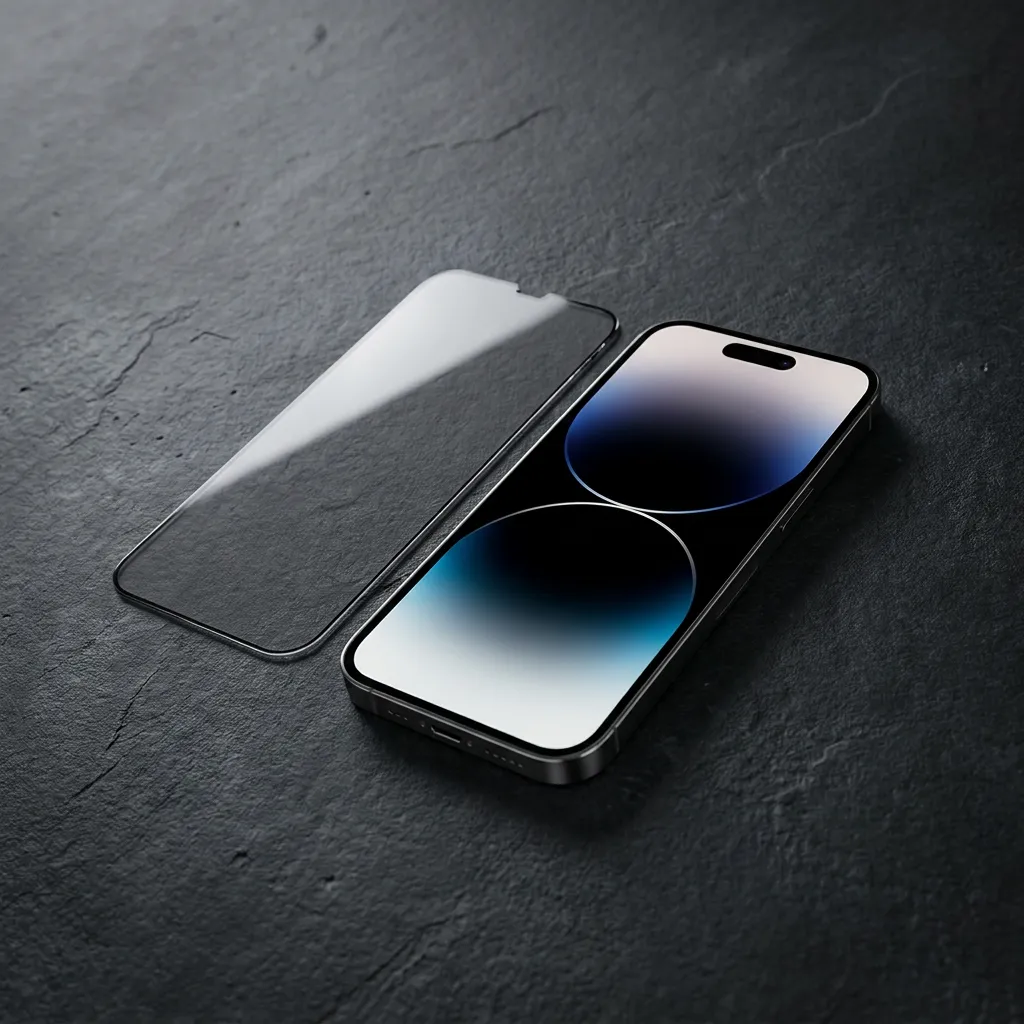
Most people do not think about screen privacy until they are in a place where someone is sitting too close.
A crowded subway.
A coffee shop table.
A classroom.
An office desk.
An airport waiting area.
You open your phone for a message, payment app, photo, or work email. Then you realize the person beside you could probably see more than you want them to see.
This is where privacy film becomes useful. But AR privacy film goes a step further. It is not only about blocking side views. It also tries to make the screen clearer and more comfortable to use.
An AR privacy film combines two ideas.
The privacy structure makes the screen harder to see from side angles. The AR coating helps reduce screen reflection. Together, they make the phone more practical for daily public use.
From the front, the screen should stay clear for you.
From the side, the screen becomes darker and less visible.
Under bright light, the AR layer helps reduce reflection.
That combination is why AR privacy film feels more complete than a basic privacy protector.
Basic privacy films solve one main problem: side viewing.
That is useful, but many users also care about other things. They do not want the screen to become too dark. They do not want heavy glare. They do not want rough touch or fingerprints everywhere.
A privacy film should protect privacy without making the phone annoying to use.
AR privacy film is made for that balance. It gives privacy from the side while still focusing on front-view clarity and daily comfort.
Privacy film is not only for people hiding something. It is for normal daily situations.
You may want privacy when:
These are ordinary moments. The phone simply contains too much personal information to leave the screen open to everyone nearby.
The problem with some privacy films is that they can make the screen feel darker or more reflective. If the front view becomes uncomfortable, users may remove the film after a few days.
AR coating helps improve the viewing experience by reducing surface glare. This makes the screen feel cleaner under bright light.
That is important because public spaces often have difficult lighting. Subways have overhead lights. Cafés have windows. Offices have ceiling lights. Airports have bright glass walls.
A privacy film that also handles glare is more useful in these spaces.
The best kind of screen protection does not force you to change how you use your phone.
You should still be able to text, scroll, watch videos, check maps, and use apps normally from the front. Privacy should happen quietly in the background.
That is the ideal experience:
You use your phone as usual.
People beside you see less.
The screen still feels clear to you.
This is why AR privacy film can feel like a small but meaningful upgrade.
Privacy screen protectors usually rely on a micro-louver structure or directional optical design. The idea is to control the viewing angle of the screen.
From a straight-on angle, light passes through toward the user. From side angles, less screen content is visible.
This kind of structure has to be balanced carefully. If the privacy effect is too aggressive, the screen can feel too dark. If it is too weak, the user does not get enough side privacy.
The best privacy film is not just the darkest one. It is the one that gives privacy while keeping the front view comfortable.
Screen clarity matters because people use phones for everything: messages, video, navigation, photos, work, and shopping.
If privacy film makes the screen look dull, users notice it immediately. AR privacy film helps reduce some of that problem by focusing on clearer viewing and less reflection.
This is especially important for people who use their phone all day.
A screen protector should not make the phone feel worse. It should make it feel safer, cleaner, and more comfortable.
AR privacy film is useful for:
It is also useful for people who do not want to think about privacy every time they open their phone.
LUSA DESIGN includes privacy screen protectors and anti-reflective screen protectors as functional product lines, and its hot products include AR anti-reflective privacy, 20° privacy, and anti-spy privacy screen protector options.
This matters because AR privacy film is not just a random product combination. It directly connects two common user needs: better visibility and better privacy.
AR privacy film is useful because it solves a real everyday problem.
People use phones in public all the time. They check messages, open apps, reply to work, and view personal content around strangers, coworkers, classmates, and commuters.
A good AR privacy film helps keep the screen clear for the user, more private from the side, and less reflective under bright light.
It is not only about hiding the screen.
It is about using your phone with more comfort and control.