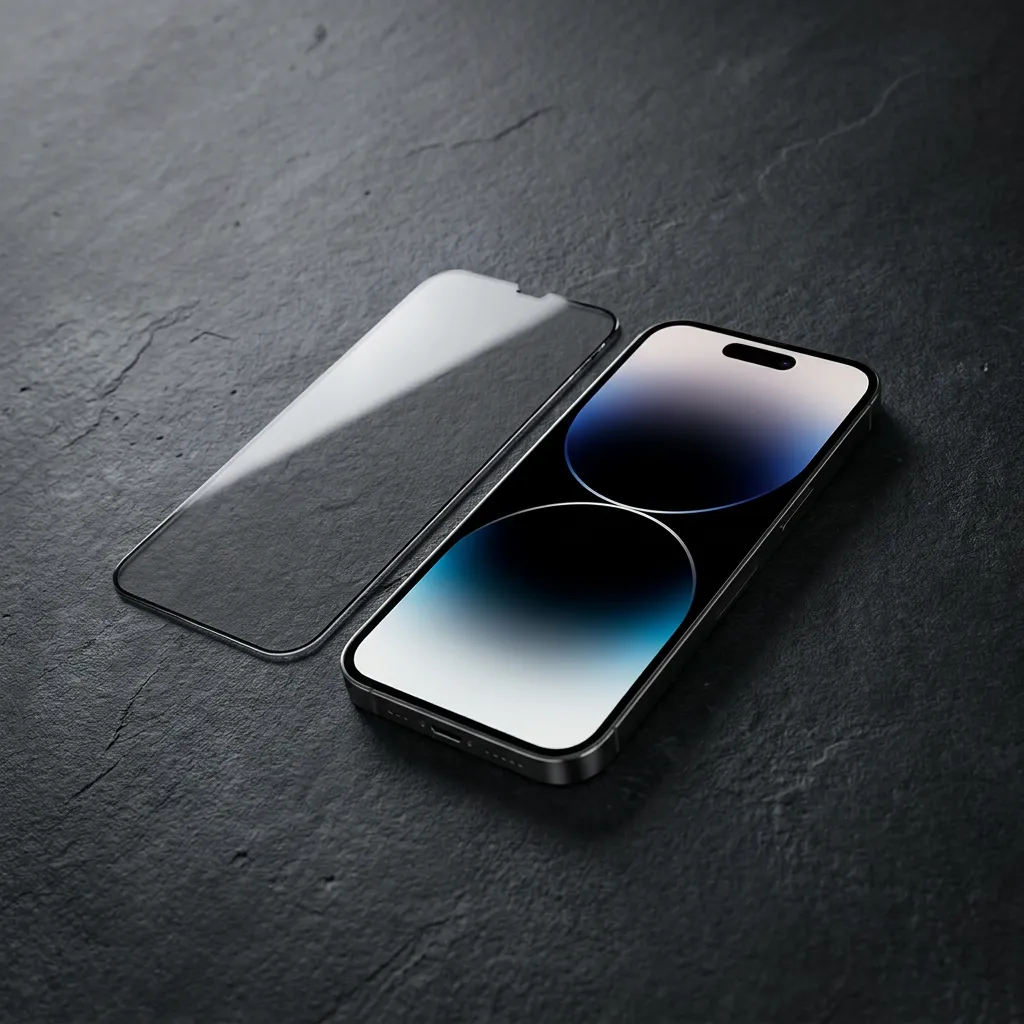
You notice a thin line on the display whenever the afternoon light hits it. The phone still works, and replacing it would be excessive. A glass screen protector may be a sensible addition when you want to protect the usable surface. Buy it with that purpose in mind, rather than a promise that it will erase the mark.
The appearance of an existing scratch after installation is not something to guarantee from a product photo. Its depth, position, lighting, and the condition of the screen all matter. Tempered glass is an accessory laid over the phone, not a resurfacing treatment.
If the phone already has a protector, the line may be in that replaceable layer. Check the purchase record or ask whoever fitted it. Avoid probing an uncertain edge with a blade. Identifying the installed accessory is more useful than trying to judge the layers by touch alone.
If the bare phone surface is scratched, inspect it gently under normal room light. A visible crack, chipped area, or lifting display calls for professional advice. Do not use new glass as a way to hold a damaged screen together or to make a safety concern disappear.

For a minor cosmetic mark on an otherwise sound phone, consider how much it actually affects daily use. Can you read a message normally? Is the mark distracting only when the screen is off? Does the touchscreen still behave as expected?
Those questions help set a realistic objective. You may want a replaceable surface for future handling rather than a showroom appearance. If the mark is unacceptable even with that expectation, ask about service options before spending money on a cover.
The LUSA DESIGN HD tempered glass protector is described as a glass accessory with an anti-reflective coating and installation tray. It is an option to consider for a compatible, structurally sound iPhone display. Its role should not be confused with polishing or repairing that display.
Before ordering, ask LUSA DESIGN whether your particular surface condition is suitable for installation if you have any doubt. Describe the mark and include a clear photograph through the appropriate support channel. A support team can address product fit, while a repair provider can assess the phone itself.
Follow the supplied preparation instructions. Avoid toothpaste, polishing powders, household fillers, and improvised liquids intended to hide the scratch. These are not part of the protector's installation method. Adding a chemical experiment makes it harder to know whether the surface is suitable for the adhesive.
After fitting, look at the display in a few familiar rooms. Some marks may remain noticeable. Do not keep lifting and reapplying the glass in pursuit of an invisible scratch; that can create an additional installation problem.
A phone does not have to look brand-new to be worth protecting. New glass can be a practical next step for a serviceable device, provided the purchase is based on future surface protection and an honest view of the wear already present.