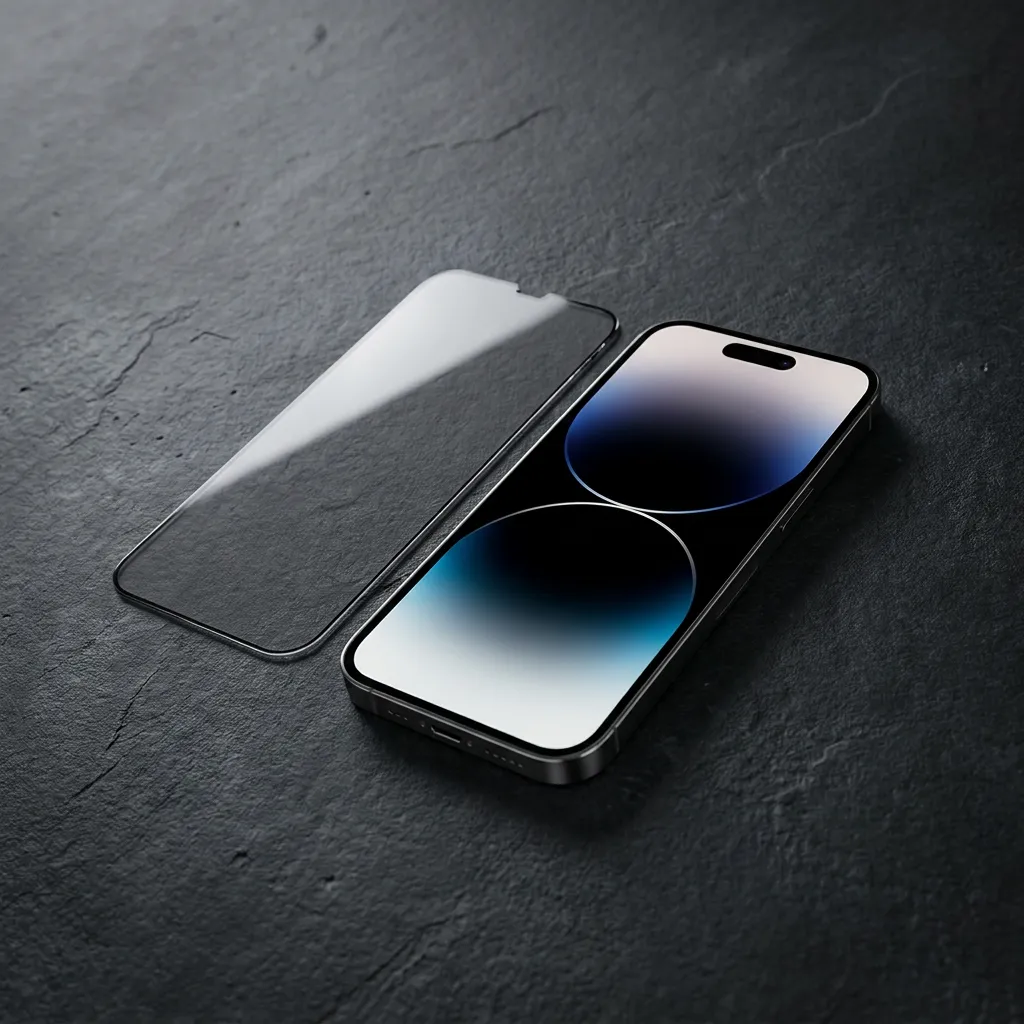
A screen protector can look perfect in a product photo and still feel wrong once it is on your phone. Some people want a firm glass surface and extra confidence against everyday knocks. Others care more about an ultra-thin layer, edge coverage, privacy, or a screen that feels as close as possible to the original display.

That is why the tempered glass vs. soft film screen protector decision matters. Both can protect an iPhone from daily wear, but they do it in different ways. The better choice depends on how you handle your phone, where you use it, and which tradeoffs you are willing to accept.
This guide compares the two materials without treating either one as automatically superior. It also explains which specifications deserve your attention before you buy.
Choose tempered glass if you want a firm, glass-like surface and prioritize resistance to scratches and minor impacts. It is usually the more familiar choice for people who frequently carry a phone in a bag, work on the move, or simply prefer a substantial protective layer.
Choose soft film if you want a thinner, more flexible layer that can follow the shape of the display closely. Soft film can also be useful when a particular privacy or full-coverage design is not available in glass.
Neither label tells the whole story. Coatings, adhesive design, edge shape, installation tools, device compatibility, and optical features can make two products made from the same broad material feel very different.
A tempered glass screen protector is a rigid layer designed to sit on top of the phone display. Its firm surface tends to feel more like the phone's original glass than a flexible plastic film.
Tempered glass is often chosen for:
The exact protection level depends on the specific product. Do not assume that every glass protector has the same hardness, thickness, edge coverage, or impact performance. Look for specifications on the actual product page rather than relying on the word “glass” alone.
For example, the LUSA DESIGN HD Anti-Reflective Screen Protector is listed as tempered glass and includes an anti-reflective coating and a dust-free installation tray. Its product page says it is designed to maintain touchscreen sensitivity and visual quality while reducing glare from natural and artificial light. Those features belong to that product; they should not be treated as universal features of all tempered glass protectors.
A soft film screen protector uses a flexible plastic-based layer rather than a rigid sheet of glass. It can be very thin and may conform more closely to curved or edge-to-edge areas of a display.
Soft film is often chosen for:
One LUSA DESIGN privacy screen product is described on its listing as premium soft plastic with full edge coverage. The same listing specifies a thickness of 0.01 mm, an oleophobic coating, and a high-sensitivity design. It also says that small bubbles or scratches may disappear within 24 hours. These details are specific to that listing and should not be generalized to every soft film.
Tempered glass usually feels firm and smooth. Taps, swipes, and typing can feel close to the original display, especially when the surface has a good oleophobic coating.
Soft film feels thinner and more flexible. A high-quality film can remain responsive, but its surface may feel slightly different from bare glass. If you play fast-paced mobile games, type heavily, or edit photos with precise gestures, surface feel deserves as much attention as protection.
Whenever possible, check whether the listing mentions touch sensitivity and surface coating. Those details say more about daily use than material alone.
Rigid tempered glass is commonly selected when physical protection is the first priority. A glass layer can take scratches and minor impacts that might otherwise reach the phone's display.
Soft film is better understood as a thin sacrificial layer against scratches, marks, and surface wear. It can protect the display during normal handling, but it does not behave like a rigid glass layer when the phone hits a hard object.
No protector makes an iPhone damage-proof. A case with a raised edge, careful handling, and keeping keys or abrasive objects away from the screen still matter.
The phrase “full coverage” can mean different things. Some products extend close to the outer edge, while others leave a small border for a phone case. A protector that is too wide may lift when the case presses against it. One that is too narrow may leave more of the display edge exposed.
Before ordering, confirm:
Two iPhones with similar screen sizes may still need different protectors. Match the model name, not just the diagonal measurement.
A clear protector should preserve the display's basic appearance, but specialty layers intentionally change how light moves through the surface.
An anti-reflective protector is designed to reduce distracting reflections. A privacy protector narrows the useful viewing area so that people beside you have a harder time reading the screen. These functions can affect brightness, color, reflections, or viewing angle in different ways.
The material alone does not determine optical performance. Both glass and soft film can be sold with added coatings or privacy structures. Read the exact description and decide which problem you are trying to solve:
Trying to maximize every feature at once can lead to an unnecessary compromise. Choose the functions you will actually use.
Tempered glass can be easier to align because it stays flat, but dust trapped underneath can still create a visible bubble. An installation tray can reduce positioning errors and help control dust.
Soft film is flexible, so alignment and gradual application may require more patience. Some films are designed to release minor bubbles over time, while others need to be smoothed during installation. Follow the instructions for the specific product rather than applying a glass-protector method to a flexible film.
The room matters too. Install in a clean, low-dust space, wash and dry your hands, clean the display thoroughly, and do not expose the adhesive side longer than necessary.
| Factor | Tempered Glass | Soft Film |
|---|---|---|
| Surface feel | Firm and glass-like | Thin and flexible |
| Typical strength | Better suited to scratches and minor impacts | Primarily a thin layer against surface wear |
| Edge conformity | Depends on shape and border design | Can follow edges and curves more closely |
| Installation | Often straightforward with a tray | May require slower alignment and smoothing |
| Optical options | Clear, AR, anti-glare, and privacy versions exist | Clear, privacy, and other specialty films exist |
| Best for | Users who prioritize a rigid protective layer | Users who prioritize thinness, flexibility, or a particular film feature |
This table describes common tendencies, not guarantees. Always check the exact listing.
Tempered glass is usually the better starting point if you:
The LUSA DESIGN HD Anti-Reflective Screen Protector is a relevant option for users who want tempered glass, glare reduction, and a dust-free installation tray in one product. The listing provides a model menu covering multiple iPhone generations, so select the exact device before ordering.
Soft film may make more sense if you:
The LUSA DESIGN 360-degree privacy screen listing is an example of a soft plastic design. The page lists multiple iPhone models, full coverage, 0.01 mm thickness, oleophobic protection, and a flexible film surface. Verify the exact model and privacy option before purchasing because the compatibility menu contains different iPhone generations.
Use this five-step checklist:
No. Tempered glass is a strong general choice for a firm surface and minor impact protection, but soft film can be better for users who prioritize a thin profile, flexible coverage, or a specific privacy design.
It depends on the product. Very thin films are often designed to preserve responsiveness, but the adhesive, surface coating, and installation quality also matter. Check the product's stated sensitivity and thickness.
Only if the dimensions and edge design leave enough space for the case. Look for “case-friendly” information and choose the exact iPhone model.
A privacy layer controls viewing angles, so it can change perceived brightness depending on your position and lighting. Sit directly in front of the screen and adjust brightness comfortably. The exact effect varies by product.
No. A protector can add a sacrificial layer, but drop height, impact angle, the case, and the surface all affect the outcome.
Related reading: Which Screen Protector Is Right for You?.
The tempered glass vs. soft film screen protector decision is easier when you stop looking for a universal winner. Tempered glass suits users who want a rigid, familiar surface and stronger everyday physical protection. Soft film suits users who value flexibility, thinness, and specialty coverage.
Start with your exact iPhone model and your main use case. Then compare the coating, fit, installation system, and optical features listed for the specific product.
Explore LUSA DESIGN iPhone screen protectors and choose the material and features that fit the way you actually use your phone.